How to Create a Clear Photography Quotation That Clients Understand
Learn how to create a clear photography quotation with pricing, deliverables, portfolio, event details, and client expectations.

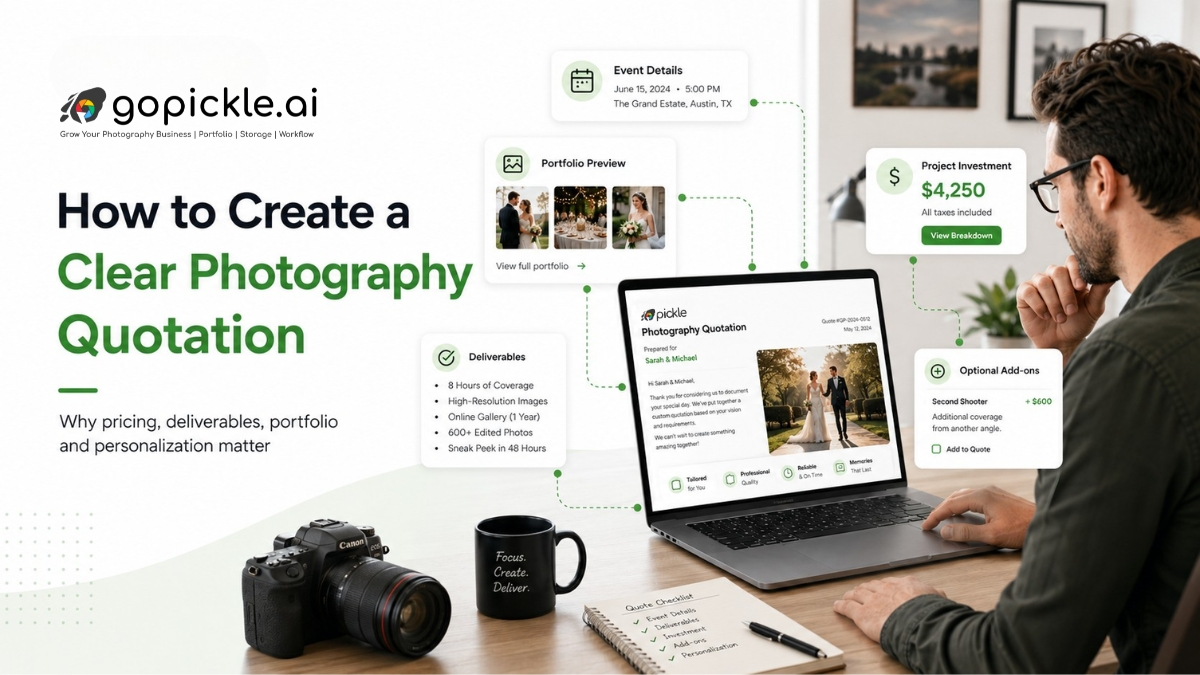
Short Answer
A clear photography quotation should not be only a price document.
It should help the client understand the event requirement, creative approach, services, deliverables, portfolio quality, cost, payment terms, and next step.
A good quotation can make or break an order because it tells the client what they are buying, what they can expect, and why the price makes sense.
Why This Matters for Photographers
Many photographers lose clients after sending a quotation.
Sometimes the client has a lower budget. But often, the quotation itself does not explain enough.
A message like “Wedding package ₹1,20,000” or a simple PDF with only item names and prices does not help the client understand value.
Clients are not buying only camera coverage. They are buying confidence.
They want to know:
- Have you understood the event?
- What style of work can they expect?
- Who will cover the event?
- What will be delivered?
- When will it be delivered?
- What is included in the price?
- What will cost extra?
- How do they confirm the booking?
From a studio operations point of view, the quotation is one of the most important sales documents. It sits between enquiry and booking. If it is unclear, the client may hesitate. If it is clear and personalised, it can help close the order.
A Quotation Is Also a Presentation
A common mistake photographers make is treating quotation as an accounts document.
It should be more than that.
A strong photography quotation can include a small presentation of your work, your approach, and what the client can expect.
For example, in a professional event proposal, the quotation may open with a strong visual, a project overview, the client’s event context, crew deployment, deliverables, pricing, inclusions, and optional add-ons.
That structure does more than show cost. It creates a theme.
It tells the client, “This is how we understand your event, and this is how we will cover it.”
This is especially useful for weddings, corporate events, brand shoots, sports events, destination shoots, and premium family functions.
What a Photography Quotation Should Include
1. Personalised event details
Start with the client’s actual requirement.
Include:
- Client name
- Event or shoot type
- Event date
- Location
- Number of functions or sessions
- Occasion or project name
- Quotation date
- Quote validity
This makes the document feel created for the client, not copied from a generic template.
For wedding photography quotation requests, mention the functions clearly. For example: engagement, haldi, sangeet, wedding, reception, or post-wedding shoot.
For commercial or event photography, mention the project objective.
2. Project overview
Before showing numbers, explain the assignment in simple language.
Example:
“This proposal covers photography and video coverage for a two-day wedding celebration, including candid moments, family portraits, ceremony coverage, couple portraits, and final edited delivery through an online gallery.”
For a brand or event shoot, the overview may explain the story, energy, audience, and output expected.
This section helps the client feel understood.
3. Portfolio or visual references
A quotation should show the quality and style the client can expect.
Add 3–6 strong images from relevant work.
For example:
- Wedding quotation: show wedding portraits, rituals, family moments, decor, and couple shots
- Baby shoot quotation: show soft portraits, family frames, details, and album samples
- Corporate event quotation: show stage, audience, speaker, branding, and candid interaction
- Motorsport or sports event quotation: show action, speed, brand presence, and atmosphere
Do not overload the quotation with a full portfolio.
The goal is to set expectation and build confidence.
4. Services included
List the actual services clearly.
For example:
- Candid photography
- Traditional photography
- Traditional videography
- Cinematic wedding film
- Drone coverage, if included
- Live event coverage, if included
- Reels or social media edits, if included
- Album design, if included
Avoid unclear terms. If the client may not understand the difference between candid and traditional coverage, explain briefly.
5. Crew or team deployment
For larger events, mention who will cover what.
This improves trust.
Example:
- 1 candid photographer
- 1 traditional photographer
- 1 cinematographer
- 1 traditional videographer
- 1 assistant
- 1 on-site editor, if included
For events with multiple areas, you can explain roles.
For example, one photographer may cover the main ceremony while another covers guests, decor, backstage, pit lane, stage, or brand activity depending on the event type.
This helps the client understand why the pricing is structured a certain way.
6. Deliverables
Deliverables are one of the most important parts of a photography quotation.
Mention exactly what the client will receive.
Examples:
- Edited high-resolution photos
- Online client gallery
- Highlight video
- Full event video
- Teaser or reels
- Printed album
- Album design
- Same-day preview images
- Social media-ready images
- Delivery timeline
For example, instead of saying “edited photos included,” say:
“500–700 professionally edited images delivered through an online gallery within the agreed timeline.”
Clear deliverables reduce confusion later.
7. Cost and payment terms
The cost must be easy to find and easy to understand.
Mention:
- Total package amount
- Taxes, if applicable
- Advance payment
- Payment milestones
- Balance payment terms
- Payment method
- Booking confirmation process
Do not hide the price in a long paragraph.
A client should be able to understand the investment quickly.
At the same time, the sections before the price should explain why the investment makes sense.
8. Inclusions and exclusions
This section prevents disputes.
Mention what is included and what is not included.
Possible inclusions:
- Local transportation
- Basic editing
- Online gallery
- Album design
- Team meals during event hours, if applicable
Possible exclusions:
- Travel
- Stay
- Extra hours
- Additional album pages
- Raw files
- Extra edits
- Additional reels
- Venue permissions
- Special equipment rentals
Be clear, but keep the tone professional.
The client should not feel warned. They should feel informed.
9. Optional add-ons
A good quotation can also help increase order value by showing useful add-ons.
Examples:
- Extra photographer
- Drone coverage
- Same-day edit
- On-site photo editor
- Additional album
- Parent albums
- Reels package
- Live streaming
- Express delivery
Add-ons should be practical, not forced.
Explain why the client may need them.
For example:
“On-site editor: useful when the client needs selected edited images during the event for social media or press sharing.”
This helps the client decide.
10. Next step
End the quotation with a clear action.
Example:
“To confirm the booking, a 30% advance payment is required. Once confirmed, the date will be blocked and the final event schedule can be updated closer to the shoot.”
The next step should remove doubt.
Do not make the client ask, “What should I do now?”
What Most Photographers Get Wrong
Many photographers send quotations that are too thin.
Common issues include:
- Only sending price
- Not personalising the quotation
- Not showing relevant portfolio work
- Not explaining deliverables
- Not mentioning team size
- Not separating inclusions and exclusions
- Not explaining add-ons
- Not giving a clear booking step
- Not making the document visually professional
A quotation is often the document the client shares with family, partners, or decision-makers.
If the document is weak, your value may not be understood even if your work is strong.
Where GoPickle Helps
GoPickle helps photographers manage quotations, client requirements, leads, bookings, invoices, albums, and studio workflows in one place.
Instead of preparing quotes across WhatsApp, PDFs, spreadsheets, and manual notes, photographers can keep the client requirement, quotation details, follow-up status, booking progress, and payment workflow connected.
A studio can create a clear quotation, track whether the client is interested, follow up on time, convert the quotation into a booking, and later continue the same client journey through invoices and album delivery.
The goal is simple: reduce confusion, improve professionalism, and help the client understand the value before booking.
Final Takeaway
A photography quotation can make or break an order.
It is not just a number.
It is a personalised sales document that explains the client’s requirement, your creative approach, your portfolio, your services, your deliverables, your cost, and the experience the client can expect.
When the quotation is clear, the client feels confident. When it is vague, the client compares only price.
For photographers, this is a major difference.
A strong quotation helps clients understand value, reduces repeated questions, prevents confusion, and makes the booking process easier.
If your studio wants to manage quotations, enquiries, bookings, invoices, and client delivery in one place, GoPickle can help create a cleaner and more professional workflow.