How to Create a Professional Photography Quotation That Helps Clients See the Value
Learn how to create a professional photography quotation with pricing, services, portfolio samples, visual mood, deliverables, payment terms and a clear path to booking.

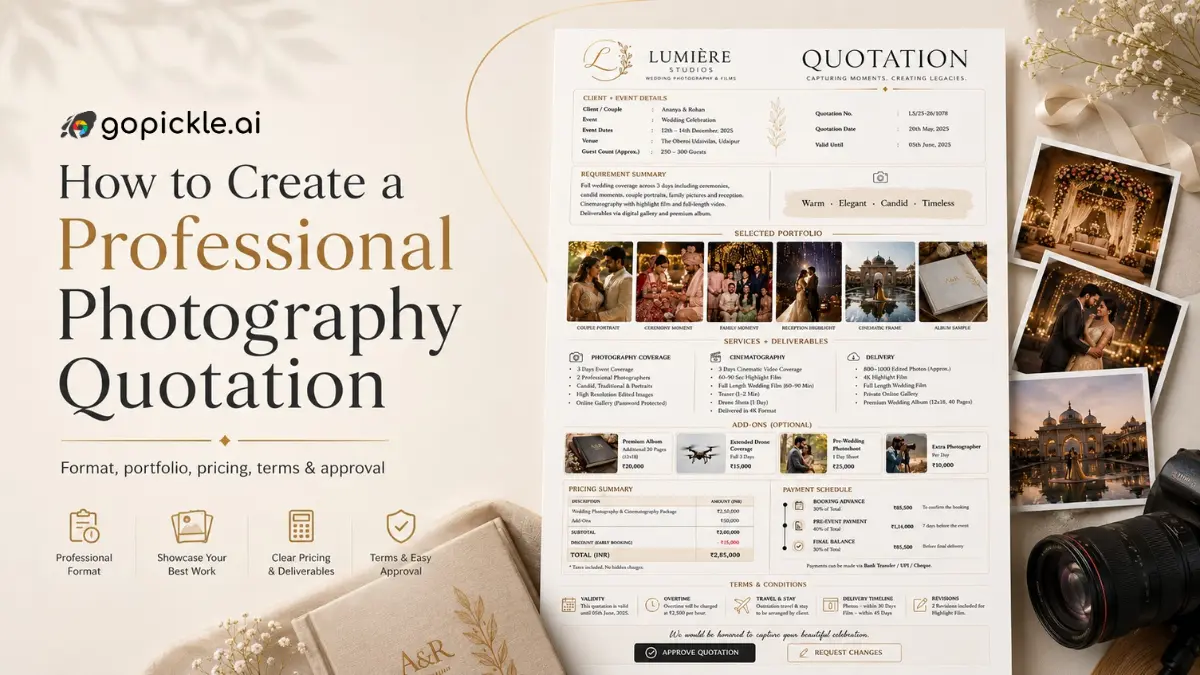
When photographers talk about quotations, the conversation usually starts with price.
How much should the package cost? How should services be itemised? Should the album be included or shown separately? What percentage should be collected as an advance?
Those questions matter, but I think we often begin one step too late.
A photography client is not really buying four hours of coverage, two photographers, 500 edited images and an album. They are buying an expectation of what their wedding, event, family or brand will eventually look and feel like.
A strong photography quotation should therefore do two jobs at the same time. It should define the commercial agreement clearly, and it should help the client visualise the photography they are being asked to pay for.
That idea has influenced how we think about quotations at GoPickle. A quotation should not be an accounting document with prettier colours. It should communicate the requirement, relevant portfolio, package, deliverables, price, terms and next step as one coherent offer. GoPickle's current workflow is designed around that broader quotation context, including portfolio images alongside packages, deliverables, add-ons, taxes and payment terms.
If you are figuring out how to create a photography quotation, this is the structure I recommend.
Start With What the Client Is Actually Trying to Create
Before thinking about the quotation format, understand the shoot properly.
For a wedding enquiry, that could mean the number of functions, venues, dates, expected style, photography and cinematography requirements, family priorities, albums and budget. For a brand shoot, it may mean campaign purpose, locations, image usage, number of final photographs and the visual direction the client wants.
The quotation becomes much stronger when it responds to that requirement instead of looking like the same PDF you send everyone.
At GoPickle, we have deliberately built the lead-to-quotation workflow around capturing photography context first: shoot type, date, venue, functions, services, deliverables, budget and expected value. The principle is simple: it is difficult to recommend the right package when you do not yet understand what the client is asking for.
Read More: photography lead management software
A Photography Quotation Should Show the Work, Not Just Describe It
This is the part I believe photographers should take much more seriously.
Imagine receiving these two quotations.
The first says:
Wedding Photography Package - ₹1,50,000
Candid photography
Traditional photography
Cinematography
500 edited photographs
Wedding film
Album
The second quotation includes the same services and price, but beside them the client sees a carefully selected set of images showing the kind of candid moments, portrait style, colour treatment, reception atmosphere and album presentation they can expect.
The second quotation is easier to understand because photography is a visual service.
Words such as candid, cinematic, editorial or documentary mean different things to different people. A portfolio reference gives those words a visual definition.
That does not mean turning a quotation into a 40-page portfolio. The objective is relevance, not volume.
For a wedding quotation, I would normally show a small selection that reflects the requirement being quoted:
- one or two candid photographs
- a couple portrait
- one ceremony or family image
- one low-light or reception photograph if relevant
- a cinematography still or film reference where video is included
- an album or gallery preview if that is part of the package
The images should answer:
“Is this roughly the kind of work I should expect from this package?”
GoPickle's own photography workflow describes quotations as a place to explain value before a client compares only the price, and its freelancer workflow specifically includes portfolio images as part of the quotation structure.
Show a Visual Mood When Style Is Part of the Decision
Portfolio samples explain what you have done before.
A mood or visual direction can explain what you are proposing for this particular shoot.
This is especially useful for:
- pre-wedding photography
- fashion shoots
- personal branding
- maternity sessions
- commercial campaigns
- destination weddings
- styled portrait sessions
Suppose a couple wants a pre-wedding shoot in Jaipur.
Instead of merely writing:
Pre-wedding photography - ₹35,000
the quotation could include a compact visual direction:
Mood: warm architectural portraits, early-morning natural light, muted traditional colours, relaxed candid movement.
Then include three or four relevant portfolio references.
Now the couple can understand what the quotation represents creatively.
The important distinction is that a mood reference should not promise an exact recreation of another photograph. Weather, location, people, light and the natural flow of a shoot will always vary. It should communicate direction, not guarantee identical results.
For a professional photography business, that small distinction protects both creativity and client expectation.
Build the Quotation Around the Requirement
Once the visual expectation is clear, the commercial part becomes easier to evaluate.
A good photography quotation format should usually contain:
Client and shoot information
Include the client name, project or event name, dates, venues and quotation validity.
For example:
Rhea & Kunal Wedding Photography
14-16 December 2026
Bengaluru
This is more useful to the client than making the quotation number the main heading.
Requirement summary
Show that you understood the conversation.
For example:
Coverage required
Haldi - 4 hours
Sangeet - evening coverage
Wedding - full day
Reception - evening coverage
Style preference
Natural candid coverage with clean family portraits and cinematic evening footage.
That one section can immediately make a quotation feel personal rather than templated.
Present the Package as an Outcome, Not a Shopping List
Services still need to be clearly listed, but they should connect to the overall result.
Instead of:
2 candid photographers
1 traditional photographer
2 cinematographers
consider grouping the information logically:
Photography Coverage
Two candid photographers
One traditional photographer
Coverage across all confirmed wedding functions
Cinematography
Two cinematographers
Wedding highlight film
Full-length event films
Client Delivery
Professionally edited photographs
Private online Client Gallery
Wedding film delivery
Album where included
This is easier for a non-photographer to understand.
A client is not necessarily familiar with how photographers divide crews or production roles. The quotation should translate your internal service structure into an offer they can evaluate confidently.
Keep Portfolio Samples Beside the Relevant Service
I would avoid putting every portfolio image at the beginning and every price at the end.
Where possible, connect the example to the service.
If you are quoting cinematic wedding coverage, show a still or visual reference near the cinematography section.
If the package includes a premium album, show what that album presentation looks like.
If your quotation includes a branded gallery, show the gallery experience rather than merely writing “online delivery”.
This reflects another principle we use throughout GoPickle: the client experience does not stop at the shoot. GoPickle's Client Galleries are designed around organised, branded delivery because the final handoff is still part of the photography service the client remembers.
The same thinking should begin in the quotation.
You are showing the client not only what they will receive, but how the final experience will feel.
Separate the Core Package From Optional Add-Ons
Optional services are easier to understand when they do not blur the base price.
For example:
Wedding Signature Package
₹1,50,000
Includes core photography, cinematography and standard delivery.
Optional Add-Ons
Premium album - ₹15,000
Drone coverage - ₹8,000
Additional photographer - ₹10,000
Pre-wedding shoot - ₹25,000
Express delivery - ₹12,000
Where an add-on is highly visual, include a sample.
An album add-on is a perfect example. Showing a photograph of the album or a sample spread makes the value far clearer than the phrase:
Premium album - ₹15,000
The same applies to reels, cinematic films, fine-art prints and other deliverables where the finished output matters.
Internal link: photography add-on pricing guide
Make the Price Easy to Understand
Visual selling does not excuse vague pricing.
After you have established the creative value, the client should be able to understand the financial offer without doing their own calculations.
For example:
| Item | Amount |
|---|---|
| Wedding Photography Package | ₹1,50,000 |
| Premium Album | ₹15,000 |
| Drone Coverage | ₹8,000 |
| Subtotal | ₹1,73,000 |
| Discount | -₹8,000 |
| Total before applicable tax | ₹1,65,000 |
If tax applies, show it clearly.
If the client has received a negotiated discount, show that clearly too.
A professional quotation should make the final commercial position obvious.
Define the Payment Stages Before the Client Says Yes
Large photography bookings are commonly paid in stages.
For example:
Booking advance - ₹50,000
Before the first event - ₹75,000
Balance before final delivery - ₹40,000
The exact percentages will vary between studios, but the client should know the schedule before accepting the quotation.
The quotation is the right place to establish that expectation because the invoice should not introduce financial terms the client has never seen before.
GoPickle keeps quotation, booking, invoicing and payment information connected so the approved commercial terms can continue through the rest of the photography workflow.
Read More: invoice software for photographers
Terms Should Protect the Promise You Are Making
Terms and conditions often get treated as something added to the last page because every quotation is supposed to have them.
They are more useful when they clarify the parts of the job most likely to change.
Depending on the assignment, consider:
- coverage hours
- overtime
- additional events
- travel
- accommodation
- rescheduling
- cancellation
- delivery timeline
- editing scope
- album revisions
- commercial usage rights
- payment schedule
- quotation validity
For example:
Coverage beyond the confirmed event timing is billed at the agreed overtime rate.
or:
The album includes two rounds of design revisions. Further revisions are chargeable.
These statements are not there to make the quotation intimidating. They prevent the creative promise shown in the portfolio from becoming an unlimited commercial promise.
Give the Client a Clear Next Step
A photography quotation should not finish with a total and a polite “Thank you”. The client needs to know what happens next.
The natural choices might be:
Approve quotation
Request changes
Talk to the photographer
If the quotation is approved, the same agreed context should ideally move into the booking rather than being typed again from scratch.
That is how we think about the workflow inside GoPickle. The quotation is not a dead-end PDF. It sits between the enquiry and the confirmed booking, with the client, requirement, services, deliverables and payment context moving forward together.
Photography Quotation Checklist
Before sending a quotation, I would check four areas.
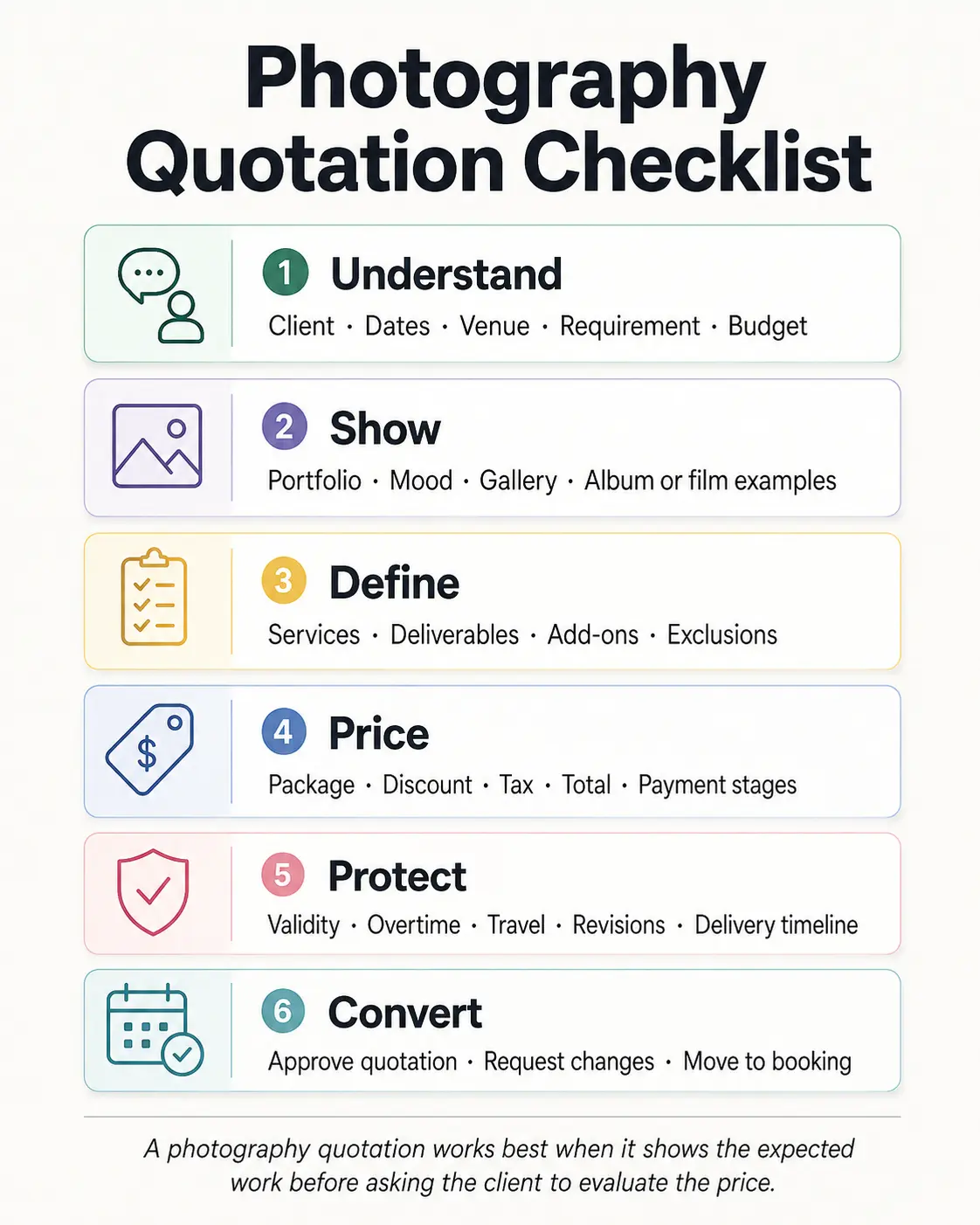
Does it show what the client can expect?
Relevant portfolio images
Visual style or mood where appropriate
Samples that match the actual service being quoted
Gallery, album or film examples where they add context
Does it clearly define the work?
Client and event details
Dates and venues
Functions
Services
Crew quantity where relevant
Deliverables
Is the commercial offer clear?
Package price
Add-ons
Discount
Tax
Final total
Payment stages
Quotation validity
Are expectations protected?
Coverage limits
Overtime
Travel
Revision limits
Delivery timeline
Cancellation or rescheduling
Clear next action
The Quotation Is Part of Your Photography
One principle we keep coming back to while building GoPickle is that the software should carry the operational weight without taking the human part away from the photographer. We built the platform around keeping the client, work, people, money and delivery connected because photography businesses rarely operate as isolated documents and calendar entries.
I think quotations deserve the same treatment. Your pricing matters. Your terms matter. Your deliverables matter. But photography is ultimately visual.
If a potential client opens your quotation and sees only ₹1,50,000, ₹15,000 and ₹8,000, you have given them numbers to compare.
If they see the requirement you understood, the photographs you can create, the mood you are proposing, the experience they will receive, the exact scope and then the price, you have given them something much more useful to evaluate.
That is what I would call a healthy photography quotation. Not a decorated invoice. A clear visual promise, supported by an equally clear commercial agreement.
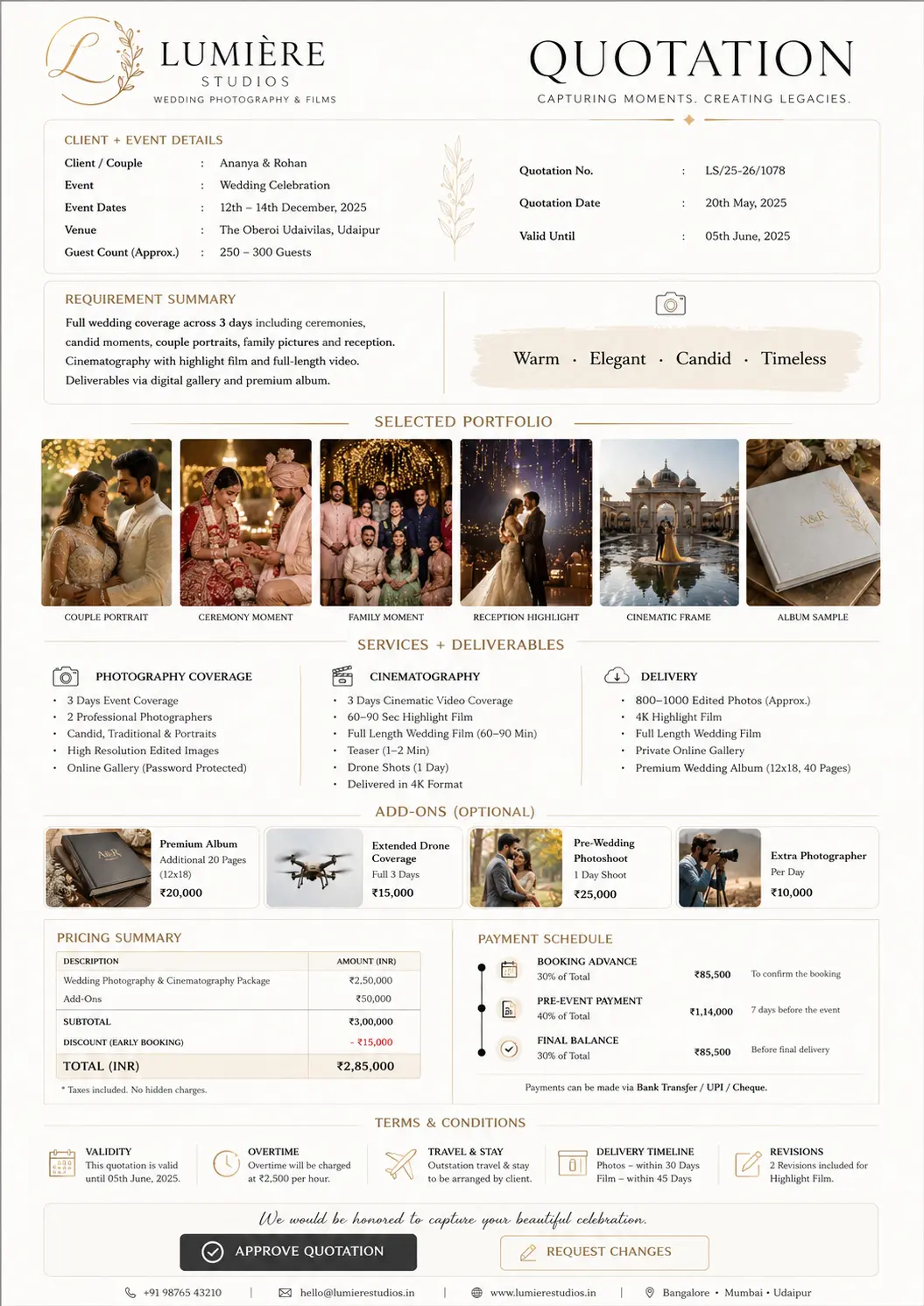
At GoPickle, that is the direction we believe photography quotation software should move: show the value, define the promise, make the price clear and carry the approved work cleanly into the booking. GoPickle's current quotation workflow already brings together portfolio imagery, packages, deliverables, add-ons, payment terms and the quotation-to-booking handoff as part of one connected photography-business workflow.
GoPickle's broader product philosophy is built around keeping the client, work, people, money and delivery connected rather than treating each step as an isolated administrative task. Client Gallery documentation was also reviewed for the sections discussing the visual delivery experience and how gallery presentation remains part of the photographer's client experience.