Photography Cancellation and Rescheduling Policy: What to Define Before Taking an Advance
Build a clear photography cancellation policy covering advances, rescheduling, weather, venue changes, travel costs, photographer cancellations and changed pricing.


A client paying an advance usually means the photographer stops offering that date to someone else. The studio may also start reserving crew, arranging travel, paying accommodation deposits or preparing specifically for the assignment. That is why a photography cancellation policy should be agreed before the advance is collected, not discussed for the first time after a wedding is postponed.
The policy does not need to be complicated. It needs to answer, in writing, what happens when the client cancels, the photographer cannot perform, the date or venue changes, weather disrupts the shoot, external circumstances make the event impossible, or money has already been spent.
Define What the Advance Is Actually For
Do not write only “50% advance, non-refundable.”
State what the payment does.
Does it confirm the booking and reserve the date? Is part of it being used immediately for travel, permits or third-party crew? How will the advance be treated if the client cancels?
This distinction matters because simply labelling money “non-refundable” does not guarantee the same legal result everywhere. For example, India’s Consumer Protection Act identifies contract terms imposing penalties wholly disproportionate to the loss caused by a breach as potentially unfair. UK consumer guidance similarly says cancellation charges should reflect genuine losses rather than operate as excessive penalties.
Your photography advance refund policy should therefore explain the commercial basis of the charge and be reviewed for the jurisdictions where you operate.
Separate Cancellation From Rescheduling
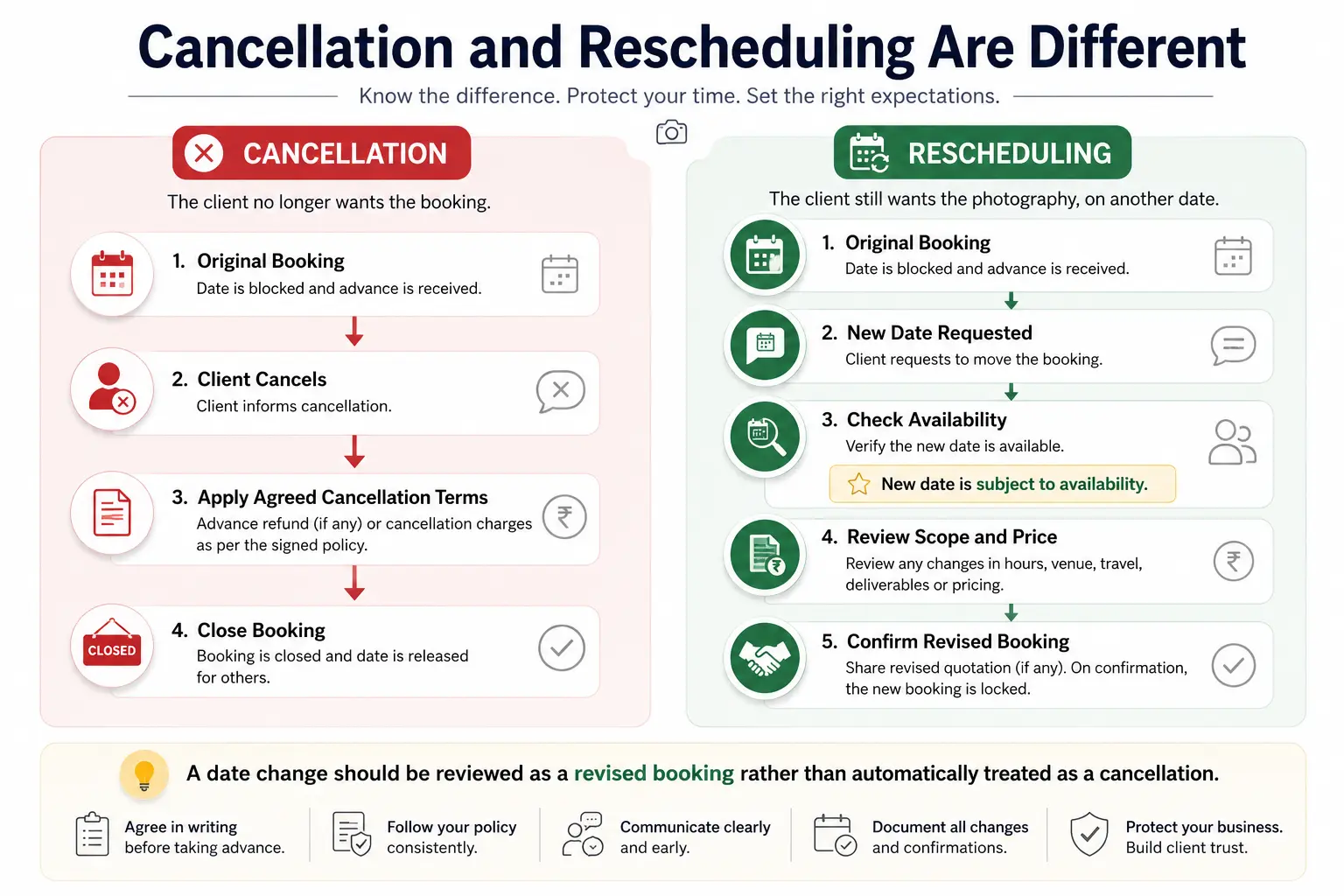
A cancelled assignment and a moved assignment are not the same business situation. If the client still wants the photography but needs another date, define how your photography rescheduling policy works before promising that the advance can simply “carry forward.”
Specify how much notice is required, how many date changes are permitted, how long the rescheduling credit remains valid and, most importantly, whether the new date is subject to availability. A wedding moved from a Wednesday in June to a Saturday in December may occupy a considerably more valuable date. Your policy should not imply that every replacement date is guaranteed at the original terms.
If the revised booking changes the event duration, crew, deliverables, travel or market pricing, state that the quotation may need to be revised. GoPickle’s Quotation Management workflow allows photographers to keep events, services, deliverables, travel, add-ons, advance and pricing together in the quotation rather than relying on an old WhatsApp message.
Decide What Happens When the Venue Changes
A date change is obvious. Venue changes can create just as much cost.
Moving a wedding from one venue in the same city to a destination wedding may introduce flights, accommodation, local transport, additional crew time or extra shooting days. Even a local venue change can affect access hours, permits or coverage requirements.
State that significant venue or scope changes require the photographer to review availability, logistics and price before accepting the revised booking. Do not automatically treat every venue change as a free amendment to the original contract.
Treat Weather Separately From a Client Changing Their Mind
Weather policies should match the type of photography you sell. Rain may make an outdoor portrait session impractical while having little effect on an indoor conference. Define who decides that conditions are unsuitable, when that decision is made and whether the first option is rescheduling rather than cancellation.
Avoid vague clauses saying every weather problem qualifies as force majeure. A proper force majeure provision should deal with events genuinely outside the parties’ reasonable control, such as certain natural disasters, government restrictions or venue closures, and state what happens next. Photography-industry contract guidance commonly distinguishes these events from ordinary client cancellations.
State What Happens to Costs Already Incurred
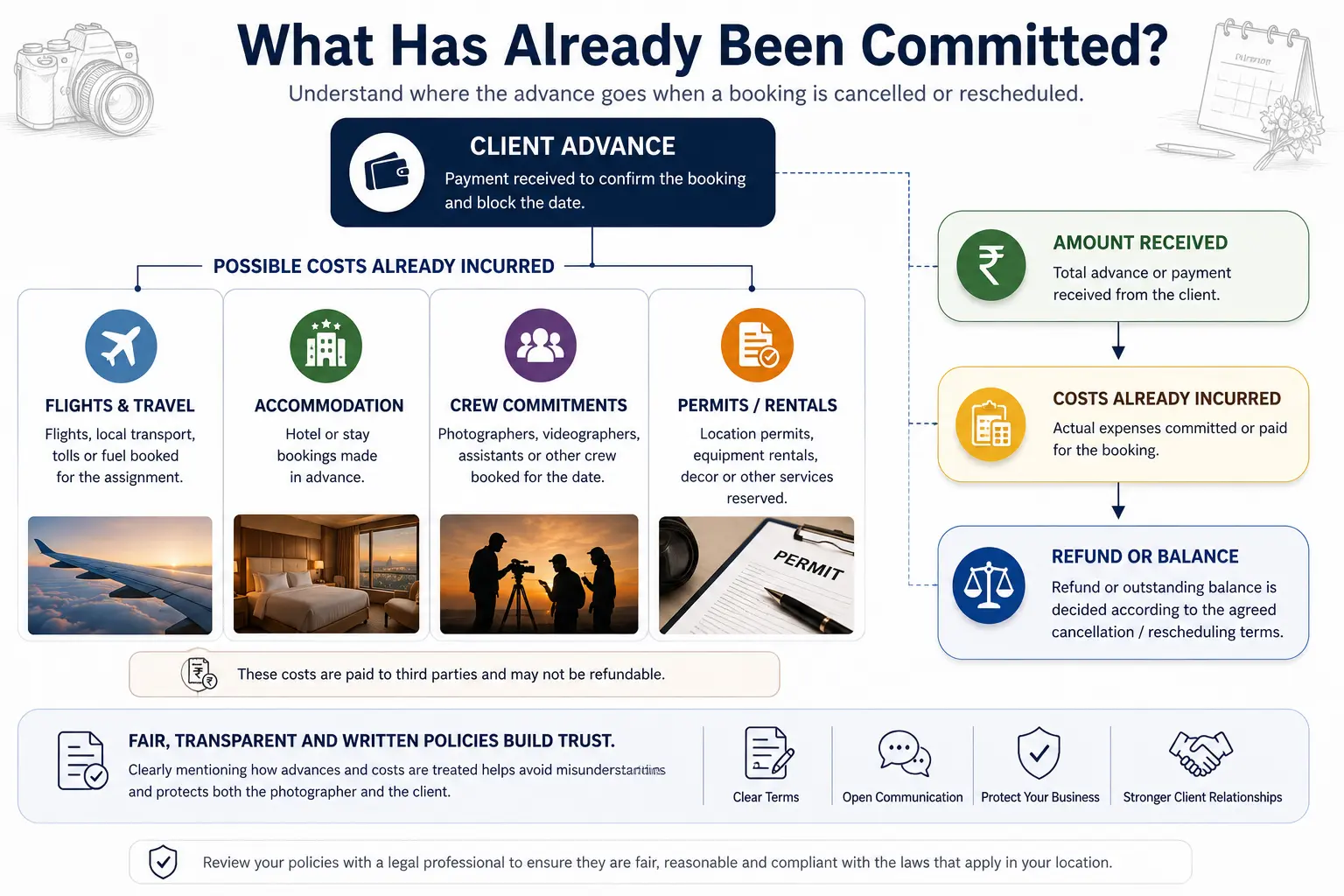
Destination and large event assignments often create expenses long before shoot day. Flights may already be booked. Hotels may have their own cancellation conditions. Freelance crew, permits or rentals may already have been paid.
Your policy should identify which third-party costs may be deducted or remain payable if the assignment changes, rather than hiding them under a broad “cancellation charge.” Keep records of these expenses so the studio can explain what has actually been incurred.
This is also why advance and balance tracking should stay connected with the booking. GoPickle’s Smart Invoicing for photographers keeps advances, instalments, partial payments and outstanding balances against the relevant client and booking.
Cover Photographer Cancellation as Clearly as Client Cancellation
Your photographer booking cancellation clause should explain what happens if you cannot perform because of illness, emergency or another serious problem. State whether the studio will attempt to provide a suitably qualified replacement, offer a mutually acceptable new date, refund payments, or use another defined remedy.
Do not write a contract that is strict when the client cancels but silent when the photographer does. Clear obligations on both sides make the policy easier to explain and easier for clients to trust.
Keep the Revised Booking in Writing
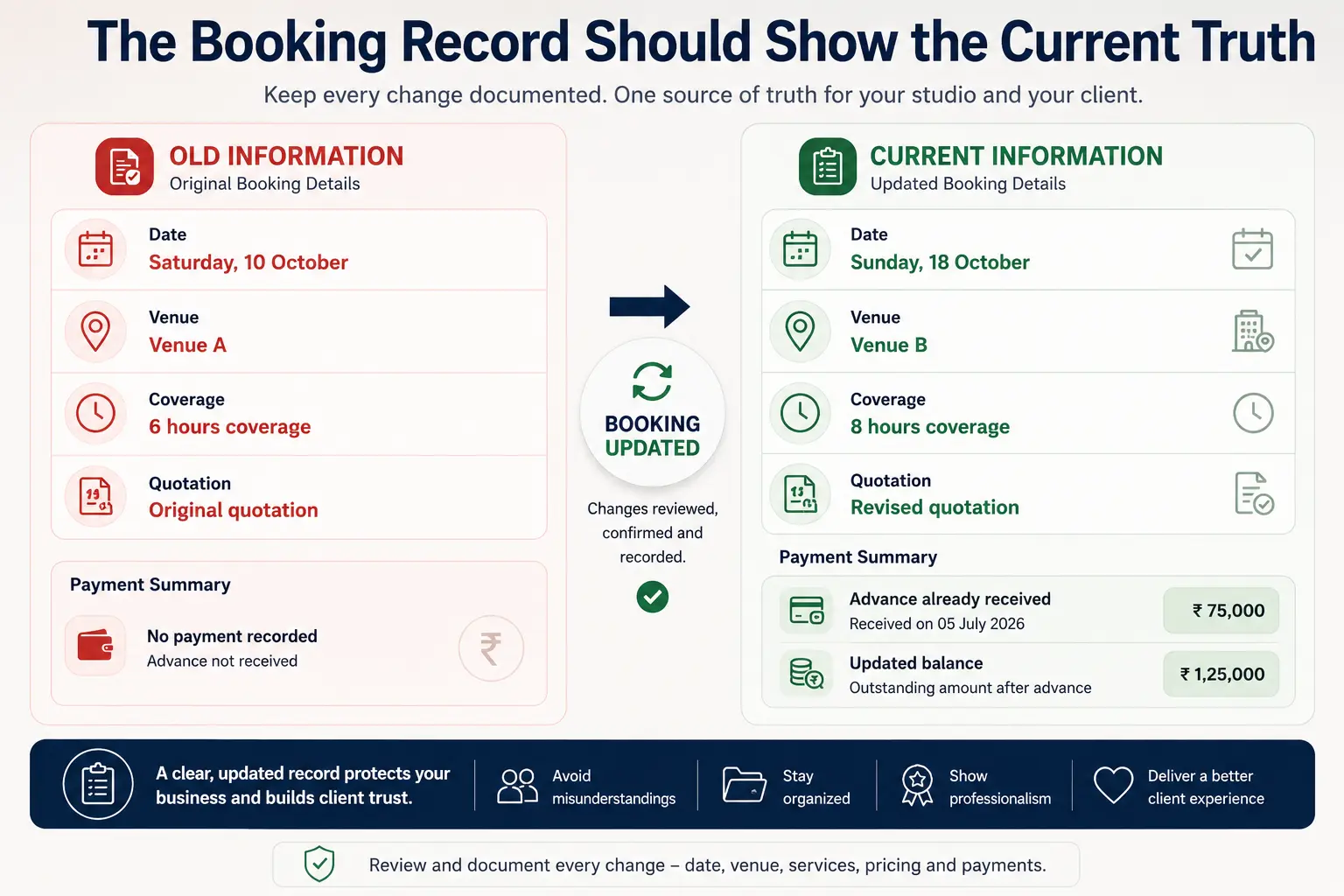
Once a date, venue, price or scope changes, update the booking record. Do not leave the original contract showing one venue while the latest WhatsApp message says another.
A good amendment should confirm the new date, venue, services, revised price if applicable, payments already received and any additional costs. In GoPickle, Photography Booking Management keeps events, venues, services, crew, quotations, invoices, advances and balances connected to the booking, giving the studio one current record before shoot day.
A photography cancellation policy cannot prevent clients from changing plans. It can prevent the financial and operational consequences from being decided during an argument. Define the rules before accepting the advance, explain them clearly during booking, and have the final contract reviewed for the markets in which your studio operates.