What to Include in a Pre-Shoot Client Welcome Pack Without Overloading the Client
Build a useful photography client welcome guide covering schedules, locations, preparation, payments, shot priorities, deliverables, photo selection and what happens after the shoot.


A booked client does not need another sales brochure. They need to know where to be, when to be there, what to prepare, what the photographer needs from them, what is still payable and what happens after the cameras are packed away. A good photography client welcome guide puts those answers in one easy place without making the client search through a 25-page document the night before the shoot.
The useful test is simple: if a section helps the client prepare, make a decision or understand the next step, include it. If it mainly repeats your website, contract or portfolio, leave it elsewhere.
Start With a One-Glance Shoot Summary
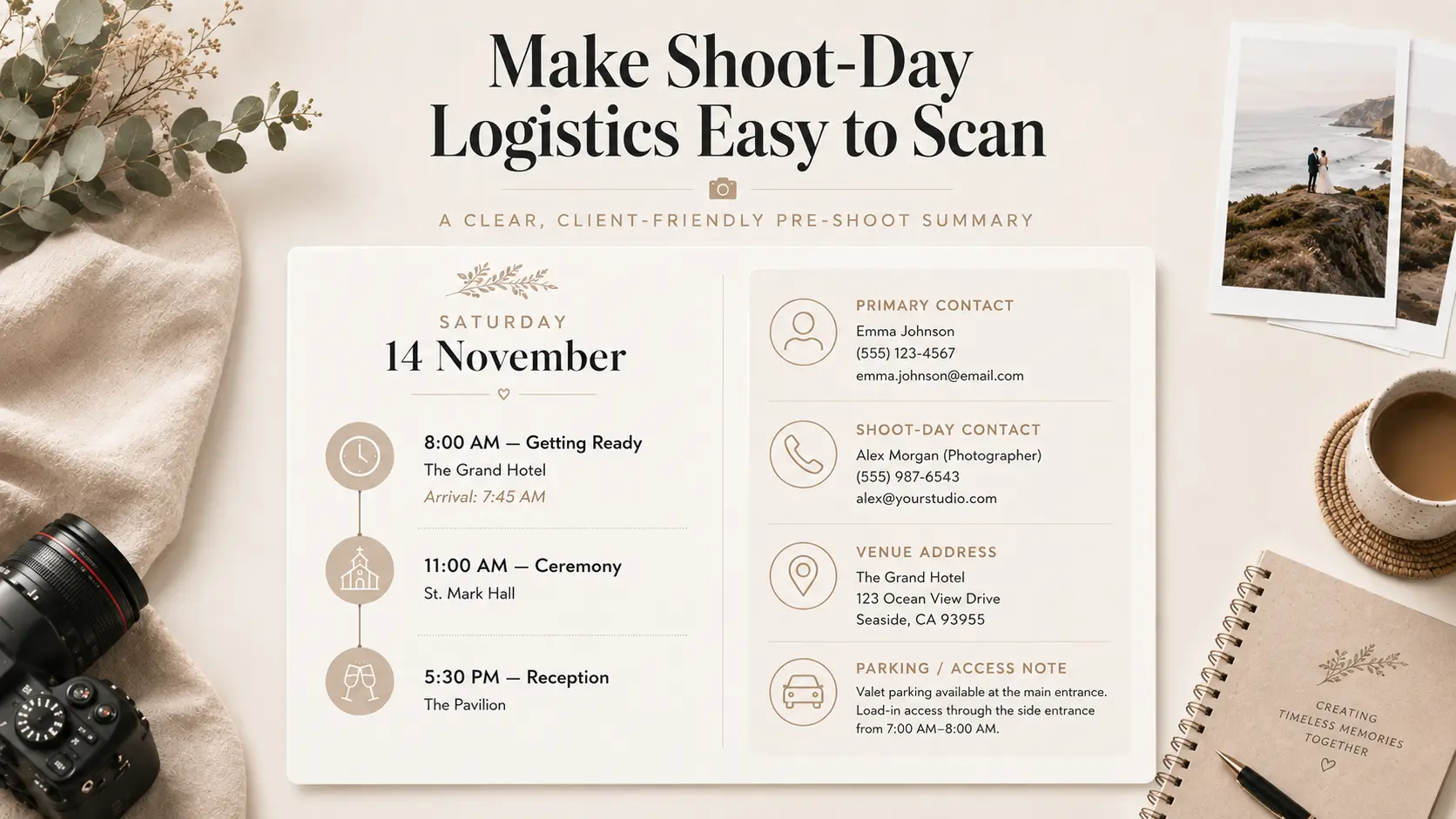
The first section should confirm the assignment the client believes they booked: client name, shoot or event type, confirmed date, broad coverage hours, main location and the package or service booked. For a wedding, list the individual events if relevant rather than compressing Haldi, Sangeet, wedding and reception into one vague entry.
This page is not the contract. It is the quick reference the client can open two days before the event and immediately recognise. Your internal booking record should contain the same current information. GoPickle’s Booking Management for Photographers keeps events, dates, venues, services, deliverables, crew and payment context connected, which makes it easier to prepare a welcome pack from current details rather than an old quotation.
Put Contacts, Schedule and Locations Together
Do not make the client hunt across different pages for logistics. Show the main studio contact, an appropriate shoot-day contact, reporting or arrival time, venue names and addresses, and any important movement between locations. If parking instructions, permits, entry gates or venue access rules regularly cause confusion, include them here.
For a portrait session this may take half a page. A multi-event wedding may need a compact timeline. A commercial shoot may need the client representative, call time, studio access instructions and production contact. The structure of a photographer welcome packet should change with the work rather than forcing every client through the same generic template.
Give Preparation Instructions That Affect the Shoot
Preparation advice should be specific enough to act on. Portrait clients may need wardrobe guidance, arrival instructions or advice about bringing alternative outfits. Corporate clients may need employees ready at scheduled times, products prepared, branding references approved and shooting areas cleared. Wedding clients may need to identify important family members, keep key accessories together and confirm access to locations where portraits are planned.
Avoid filling the pre shoot client guide with generic advice because it looks useful. If your clients never need six pages about colour theory, remove them. The aim is to reduce uncertainty before the assignment, not demonstrate how much advice the studio can write.
Capture Shot Priorities Without Promising Every Possible Photograph
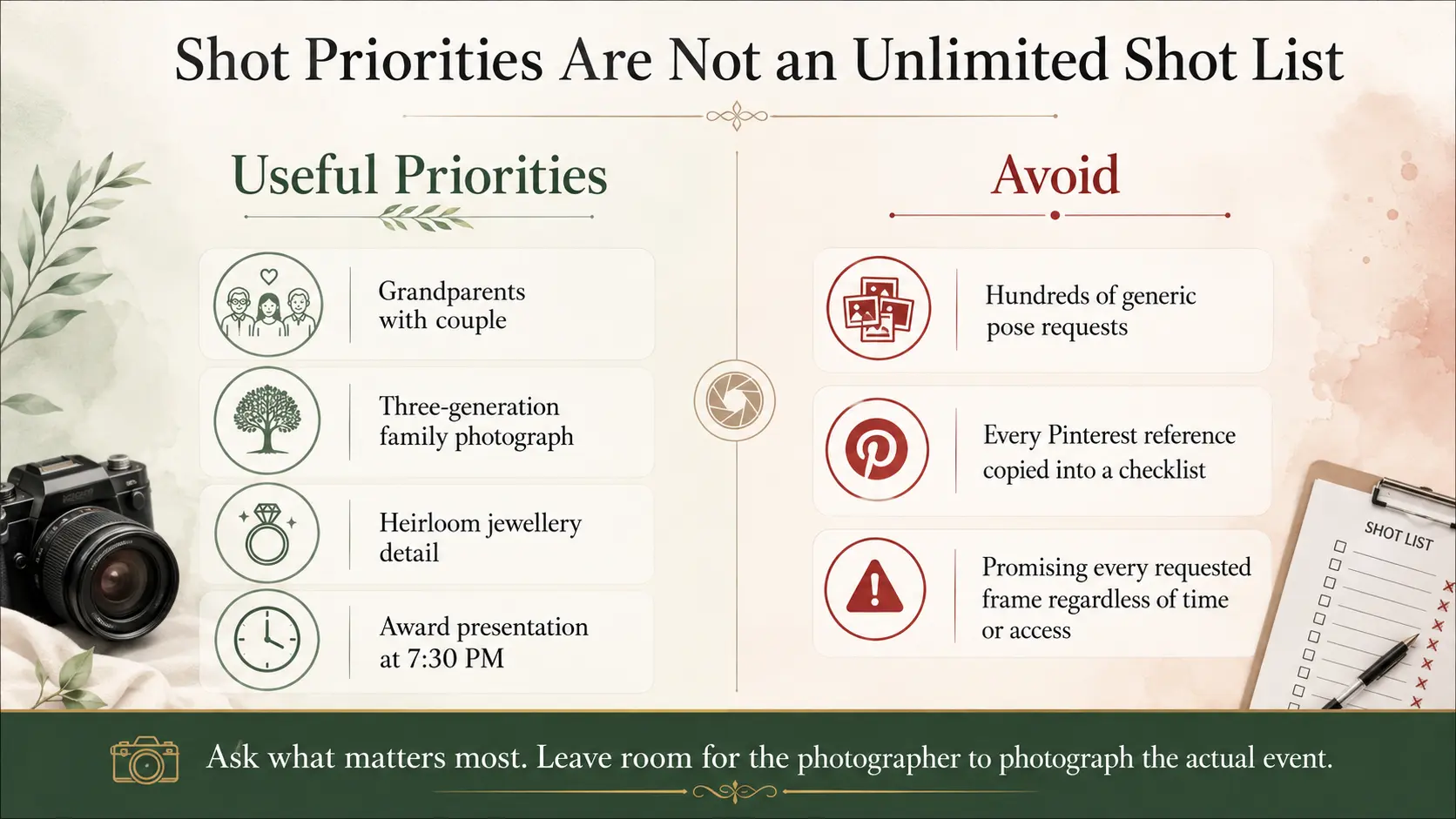
Clients should have a clear way to identify photographs that matter unusually strongly to them. For a wedding, that could include specific family combinations, heirlooms or people travelling from abroad. For a corporate event, it could be a leadership group, sponsor branding or a scheduled award presentation.
Frame these as priorities, not as an enormous checklist that suggests every requested frame is guaranteed regardless of time or circumstances. The photographer still needs room to work with changing light, schedules, access and real moments. If further information is required, use a questionnaire or planning conversation rather than forcing every detail into the welcome guide.
Make Payment Milestones Easy to Find
The client should not need to open an old invoice to remember whether another payment is due before the shoot. Include a compact payment summary showing what has already been received, the next payment milestone and when the remaining balance is due. Do not reproduce pages of financial terms already covered in the contract.
The studio’s underlying payment record should remain authoritative. GoPickle’s Smart Invoicing for Photographers keeps advances, instalments, partial payments and outstanding balances tied to the client and booking, so the welcome pack can point the client to the correct next payment rather than relying on staff memory.
Explain Deliverables Before the Client Starts Waiting for Them
State what the booked service produces. That may include edited photographs, albums, prints, short-form videos or other agreed deliverables. Give a realistic delivery window and explain the delivery method in plain language.
Then describe the selection process if one exists. Does the photographer curate the final set? Will the client receive a proof gallery and select favourites? Are album selections made after gallery delivery? Is there a deadline for submitting choices?
This information prevents a common post-shoot mismatch: the studio thinks the client understands the process because it was mentioned during booking, while the client assumes every image will arrive immediately.
GoPickle Client Galleries support organised collections, favourites, controlled downloads and client shortlisting, so the selection and delivery stage can continue through a structured gallery rather than scattered image links.
Tell the Client What Happens After the Shoot
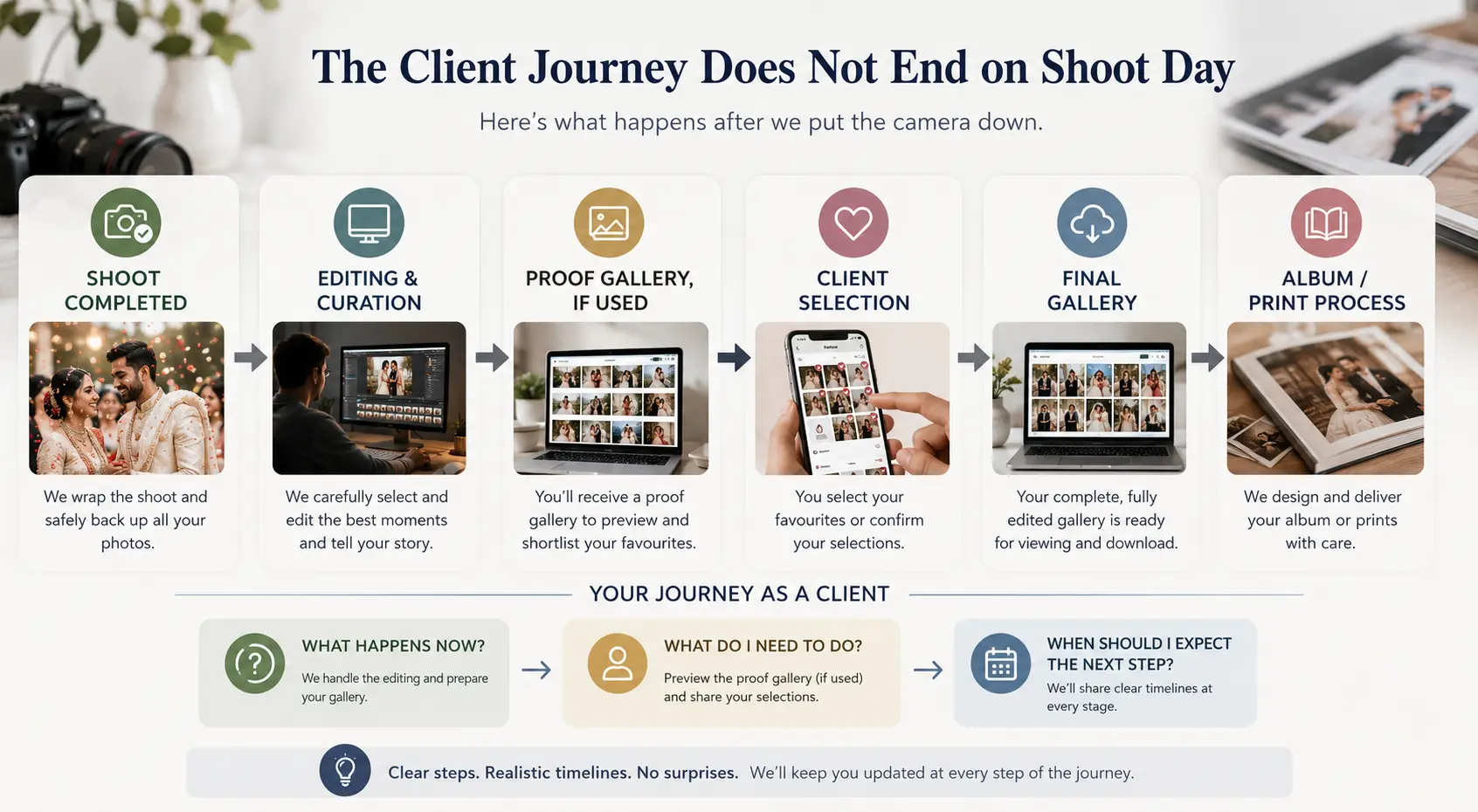
Finish the photography client welcome guide with a short timeline:
Shoot completed → Post-production → Preview or proofing if applicable → Client selection if required → Final gallery → Album or print process
Use the stages that genuinely apply to your studio. Do not promise sneak peeks, delivery dates or services simply because another photographer’s template includes them.
This small section closes an important gap in photography client onboarding. The welcome pack should not stop at “see you at the shoot.” Clients should understand what the next handoff will be and when they need to act again.
Keep Contracts, Long Policies and Marketing Out of the Way
A welcome pack can reference cancellation terms, licensing, overtime, rescheduling or other policies, but the full legally important wording should remain in the signed agreement rather than being casually rewritten into a prettier PDF.
The same applies to studio history, testimonials, awards and long portfolio sections. Those helped the client decide whether to hire you. Once they have booked, space is more valuable when it helps them prepare.
There is no perfect page count. A spacious eight-page guide can be easier to use than three pages packed with tiny text. What matters is hierarchy: shoot details first, client actions second, supporting information third.
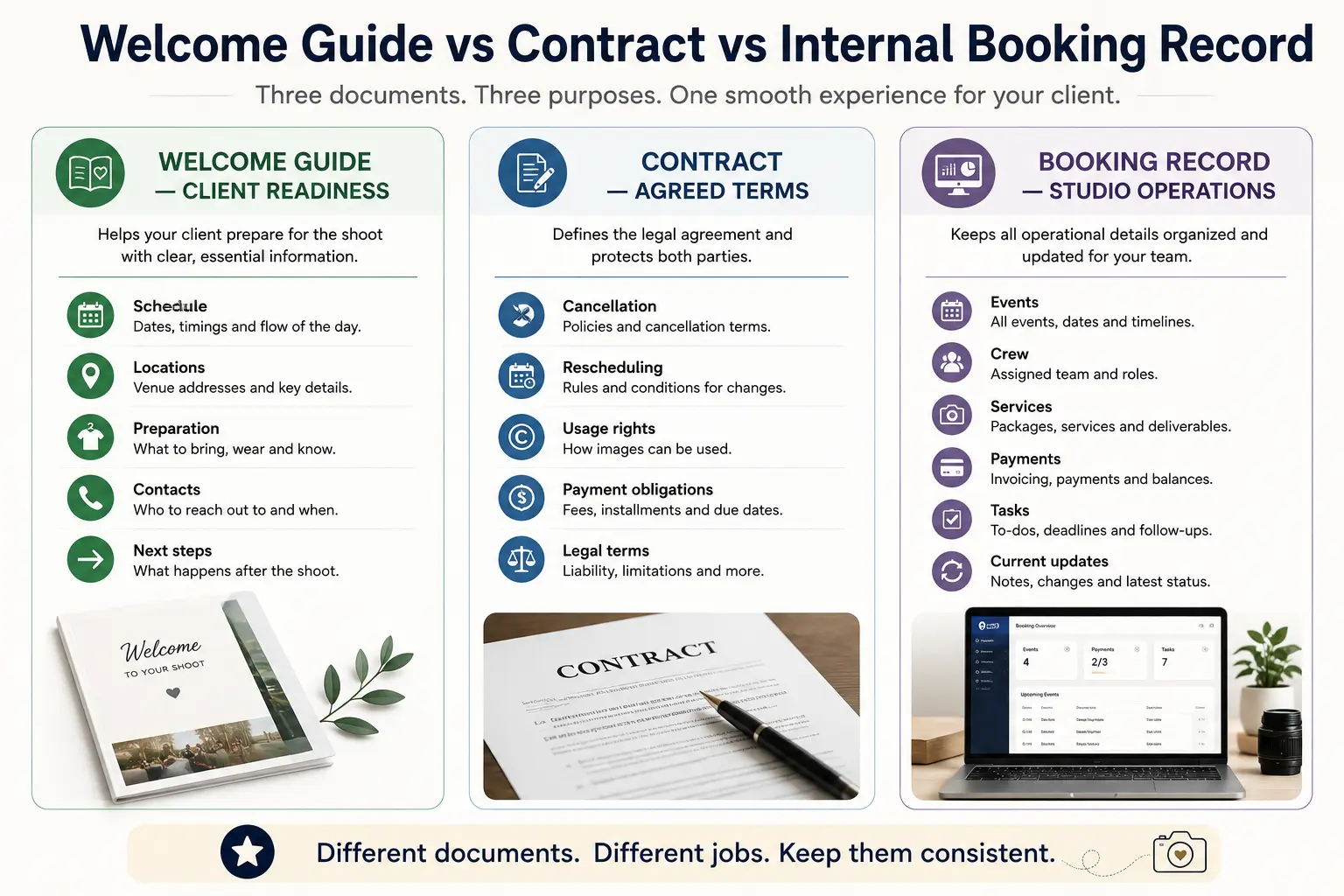
At GoPickle, that is how we think about photography client onboarding more broadly. The welcome guide is the client-facing summary; the booking system underneath it should hold the complete, current operational record. When the two agree, the client receives clearer instructions and the studio arrives at the shoot working from the same information.