How to Build a Repeat-Client System for a Photography Studio
Build a practical repeat-client system for your photography studio using client history, reminders, preferences, relevant follow-ups and consent-aware communication.


A repeat client rarely returns because a studio sent more messages. They return because the studio remembers the relationship well enough to contact them at a relevant moment. For photographers, that means treating client history as business context rather than a list of phone numbers. A useful repeat-client system should show what the person booked, when it happened, what they preferred, what follow-up is due and whether promotional contact is appropriate.
Start With One Client Record, Not a New Contact Every Time
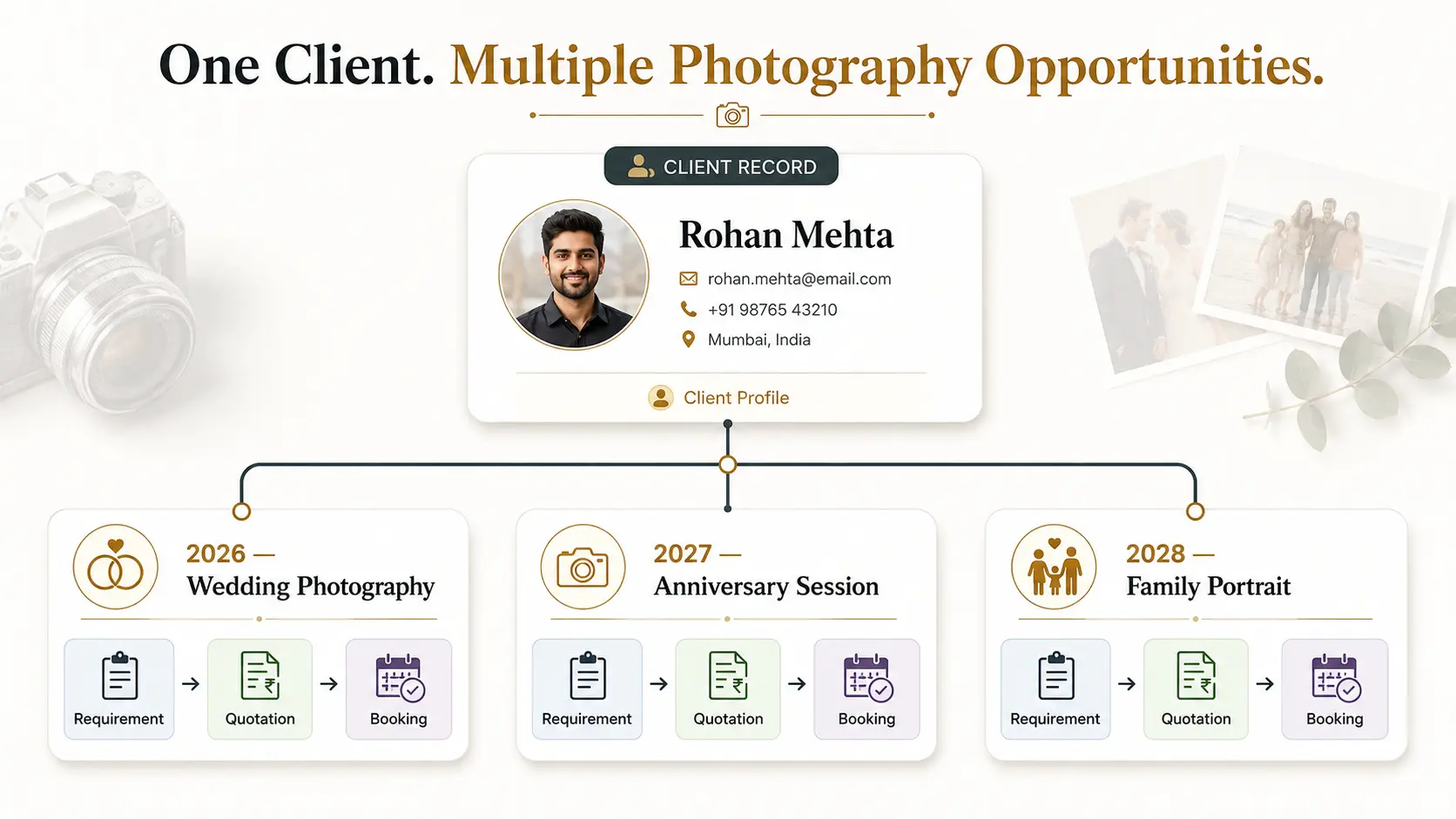
One person should remain one client even when they create several photography opportunities. If a couple booked wedding photography in 2026 and returns for an anniversary portrait in 2027, the new enquiry should sit against the existing client history rather than becoming an unrelated customer record.
This is the foundation of a practical photography CRM for repeat clients. Before replying, your team should be able to see the previous service, booking date, quotation, relevant notes and earlier requirements. In GoPickle, a contact represents the person while each new requirement can become a separate lead. The client history stays connected without mixing two different commercial opportunities. Photographers who want to see how this works in practice can follow our step-by-step GoPickle lead management workflow, How to Manage Photography Leads in GoPickle
Record Information That Can Improve the Next Conversation
Photography client management software becomes useful when it stores context, not just contact details. After a job, retain business-relevant information such as the shoot type, event date, services purchased, package, preferred communication channel, style preferences, important delivery notes and any future interest the client explicitly mentioned.
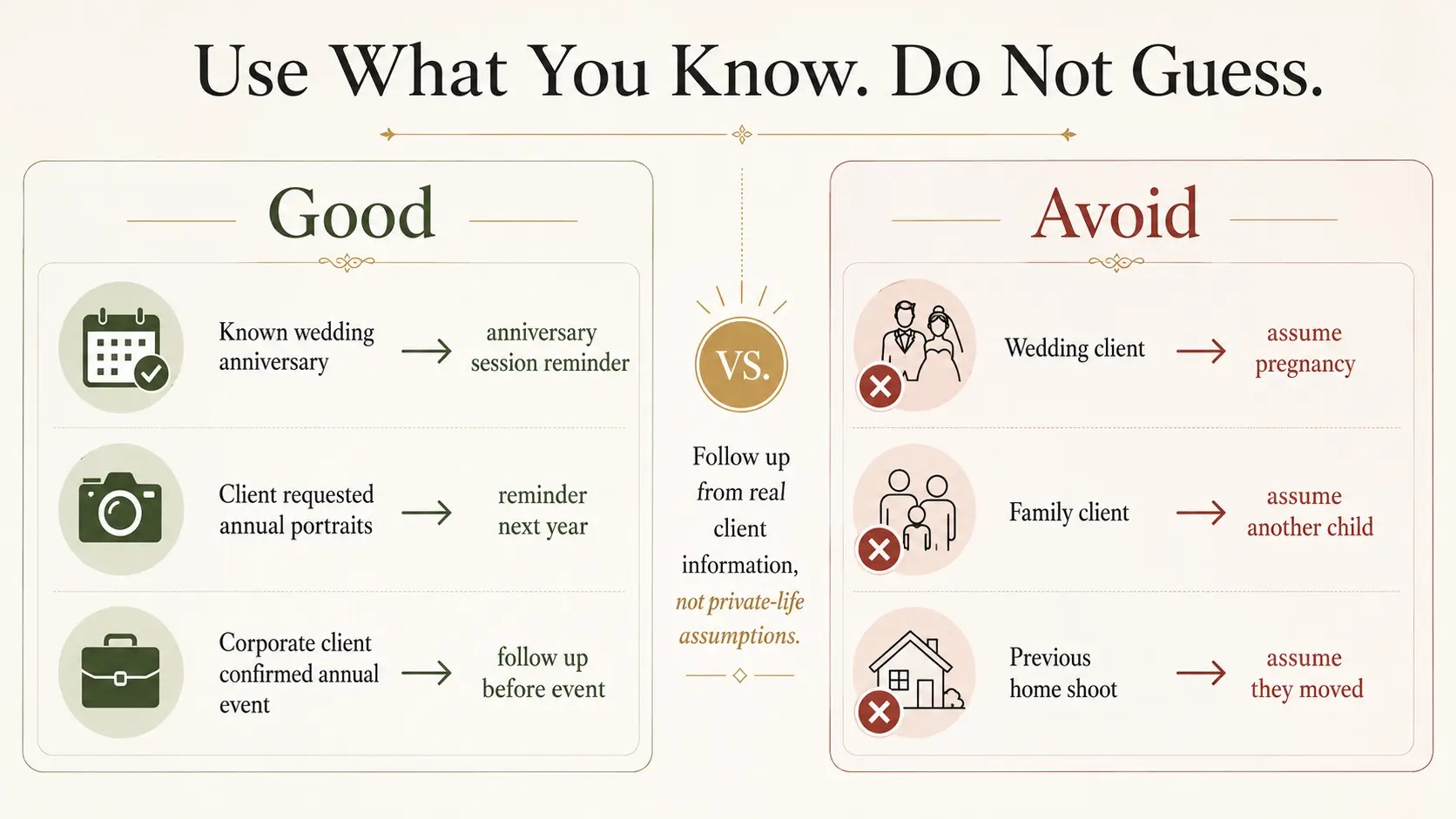
“Prefers candid-heavy family photographs and asked about an annual portrait next year” is useful. “Wedding completed” is not enough. Do not collect or infer private information simply to create marketing opportunities. A known wedding date may support an anniversary reminder, it does not justify assuming pregnancy, a baby, a new home or another personal milestone.
Turn Known Dates Into Relevant Follow-Ups
A photography client retention strategy needs timing. Once a project is complete, identify any logical future contact point while the context is fresh. A wedding studio may schedule a first-anniversary check-in. A family photographer may follow up around a client’s known annual portrait period. A corporate studio may reconnect before a documented recurring conference or campaign cycle.
The reminder should explain why the client should be contacted. “Contact Priya in early November, she asked for first access to December family sessions” is far more useful than “follow up.” GoPickle’s photography lead management workflow can schedule next actions such as calls, WhatsApp messages, emails, meetings and quotation follow-ups, with due, overdue and upcoming views. The CRM acts as the memory, the conversation can still stay personal.
Match the Offer to the Previous Relationship
Past clients should not receive every promotion your studio runs. Segment them by previous service and stated interest. Wedding clients may be relevant for anniversary sessions, albums or later family photography. Family clients may care about annual portraits or seasonal sessions. Corporate clients are more likely to need recurring event coverage, headshots or refreshed brand imagery.
This is where photography customer follow up becomes commercially useful. Instead of sending “Book another shoot,” make the next contact specific to the relationship. If there is no credible connection between the previous assignment and the new offer, leave that client out.
Separate Service Communication From Marketing Consent
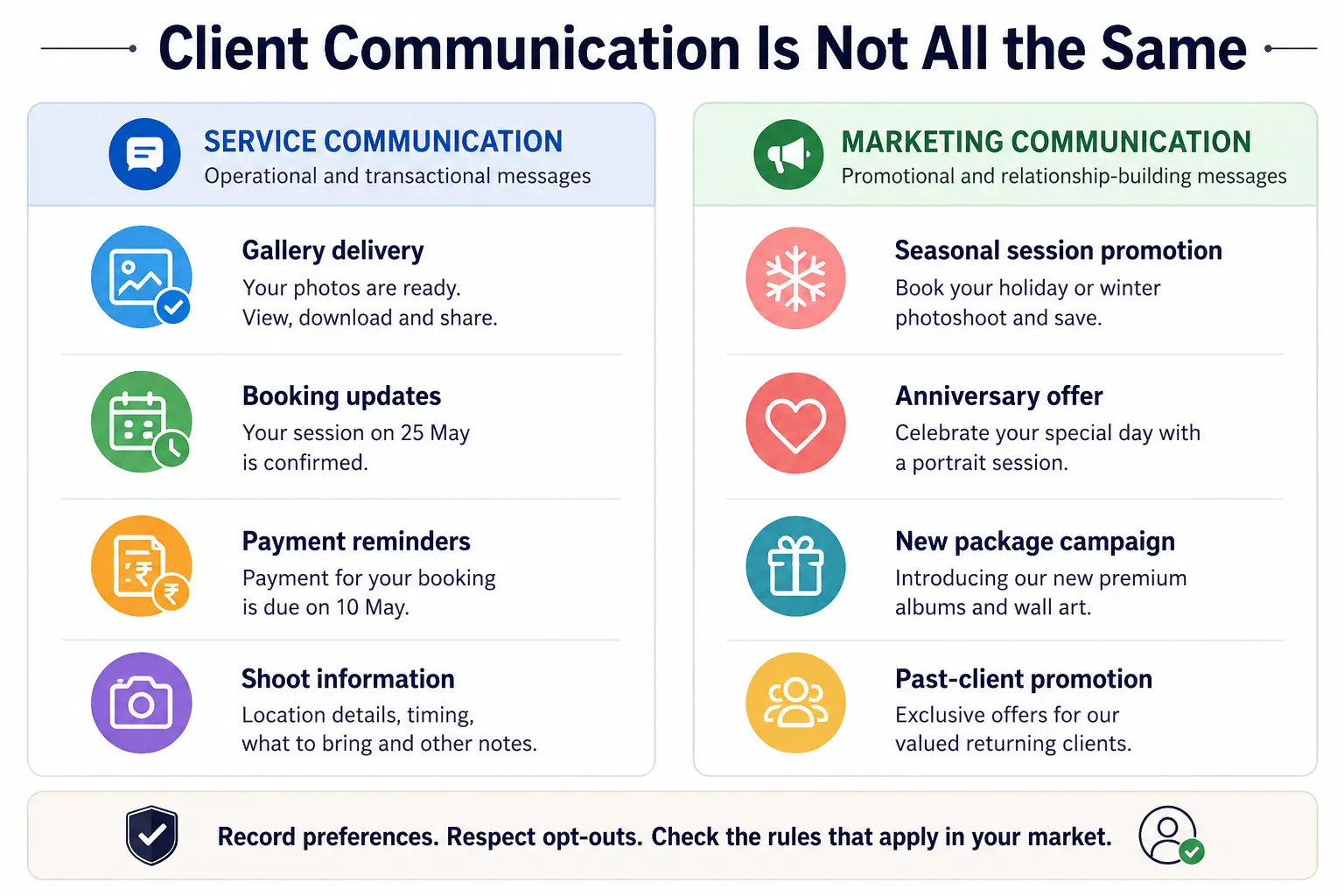
Gallery delivery, payment reminders and booking updates are different from promotional messages. A client giving you a phone number for a shoot does not automatically mean you can use it indefinitely for marketing in every country.
Rules vary by market. UK electronic-marketing rules generally require consent for marketing emails or texts to individuals unless the existing-customer “soft opt-in” conditions are met, including a clear way to opt out. US commercial email rules also require recipients to be able to opt out. Record marketing preferences, respect refusals and avoid treating a completed booking as unlimited permission to promote future work.
Use a Repeat-Client Workflow Your Team Can Actually Maintain
The operating sequence is straightforward:
Complete the job → Update the client record → Save relevant preferences → Set a legitimate future reminder → Review the history → Contact the client → Create a new opportunity if required
Do not reopen an old wedding project to track a later family session. Keeping each requirement separate preserves accurate quotations, booking details and outcomes while still showing that the person is already a client. Once that repeat enquiry is confirmed, it can move into a proper photography booking management workflow rather than remaining buried in an old conversation.
At GoPickle, we designed the lead-to-booking workflow around that connected history. A studio can capture a repeat enquiry, schedule the next action and move a confirmed requirement into booking management without rebuilding the relationship from scattered chats. A professional Client Gallery can also keep the final delivery connected to a stronger client experience.
If your current repeat-client process depends on memory, spreadsheets or WhatsApp search, start with one past client and make the next legitimate contact date visible. The system should remember the context so your team can focus on the relationship.