Payment History for Photography Bookings: Why It Matters
Learn why photographers should track booking advances, payment milestones, receipts, pending balances and payment history for better studio management.

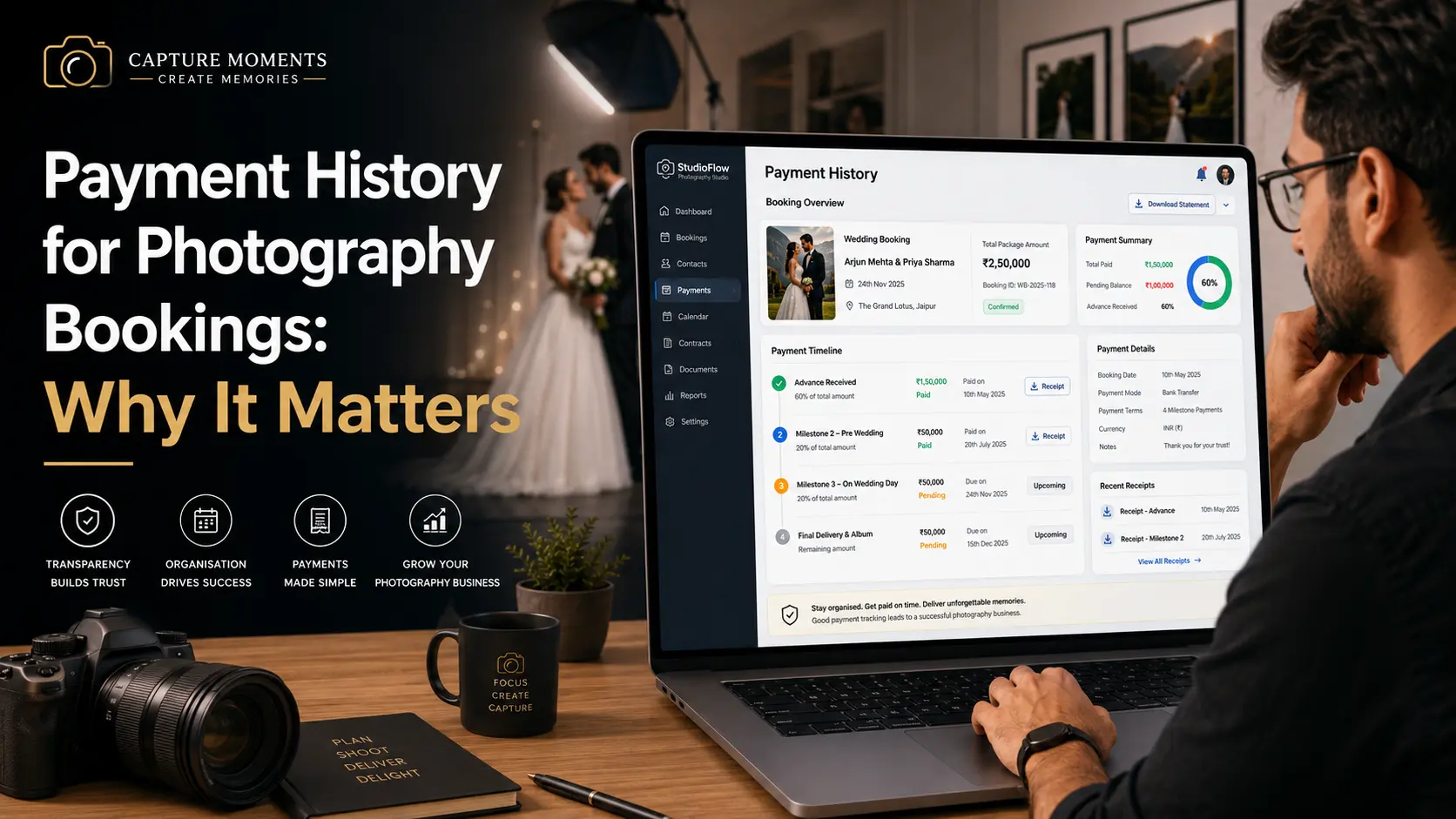
A photography booking is not complete when the client says “confirmed.”
The studio still needs to track what was agreed, what was paid, what is pending and when the next payment is due.
Many photographers manage payments through a combination of WhatsApp messages, bank notifications, handwritten notes and spreadsheets. This may work when the studio handles a few bookings, but it becomes difficult when multiple weddings, events and clients run at the same time.
A clear photography booking payment history helps the studio answer simple but important questions:
- Has the advance been received?
- How much balance is pending?
- When is the next instalment due?
- Which bookings have overdue payments?
- Was a receipt shared?
- Does the final invoice match the amount collected?
Payment tracking is not only an accounting activity. It is part of delivering a professional client experience.
Why Photography Studios Need Payment History
A single wedding booking may involve:
- Large package values
- Multiple event dates
- Advance payment
- Milestone payments
- Final balance
- Additional services
- Album upgrades
- Extra hours
- Travel charges
Without a payment record, the photographer may remember the booking but forget the financial details.
For example:
A wedding package is confirmed for ₹2,50,000.
Payment plan:
- Advance: ₹50,000
- Before wedding: ₹1,00,000
- Before final delivery: ₹1,00,000
Six months later, the studio receives a WhatsApp message:
I already paid the second amount, right?
Without a proper payment history, the team must search through bank statements, screenshots and chats.
A structured record immediately shows:
| Payment Stage | Amount | Status | Date |
|---|---|---|---|
| Advance | ₹50,000 | Paid | 10 Jan |
| Second Instalment | ₹1,00,000 | Paid | 20 Mar |
| Final Balance | ₹1,00,000 | Pending | Due before delivery |
Track Advance Payments Clearly
The advance payment is usually the point where the studio blocks the date.
A photography booking confirmation should clearly mention:
- Total booking amount
- Advance received
- Remaining balance
- Payment schedule
- Confirmation status
The advance protects both sides.
For the photographer:
- The date is reserved.
- The booking commitment is recorded.
- Availability planning becomes easier.
For the client:
- They have confirmation that the service is booked.
- They understand future payment expectations.
A professional photography booking confirmation message should include the event date, location, amount received, balance amount and next steps.
Use Payment Milestones Instead of One Final Amount
Many photography businesses collect payments in stages.
Common structures include:
Wedding Photography
- Booking advance
- Pre-wedding shoot payment
- Before-event balance
- Final delivery payment
Corporate Events
- Booking confirmation payment
- Event-day payment
- Final invoice settlement
Portrait Sessions
- Session booking fee
- Remaining payment before delivery
Milestone payments improve clarity because both the client and studio know what happens next.
The payment schedule should be mentioned in the quotation before booking confirmation.
The article on creating a clear photography quotation explains why pricing documents should include scope, deliverables and payment terms instead of only showing a final amount.
Keep Receipts for Every Payment
A payment received without acknowledgement can create confusion.
After receiving money, share a simple receipt or confirmation.
Include:
- Client name
- Booking reference
- Event name
- Amount received
- Payment date
- Payment method
- Remaining balance
Example:
Payment received: ₹50,000
Booking: Rahul & Priya Wedding Photography
Total Package: ₹2,50,000
Balance Remaining: ₹2,00,000
Thank you for your payment. Your booking remains confirmed.
Receipts create confidence and reduce future disputes.
Avoid Payment Disputes With Clear Records
Most payment disputes happen because expectations were not recorded clearly.
Common problems include:
- Client believes advance is refundable
- Studio forgets an additional service payment
- Extra hours were discussed verbally
- Album upgrade payment was not recorded
- Balance payment timing was unclear
A payment history should connect with the booking details.
For every amount, record:
- Why the payment was made
- Which booking it belongs to
- Which milestone it covers
- Who received confirmation
- Whether a receipt was issued
This becomes especially important when a studio has multiple team members handling sales and accounts.
Separate Booking Value From Collected Revenue
A confirmed booking value is not the same as money received.
Example:
A studio has:
10 confirmed weddings
Total booking value: ₹20 lakh
But:
Collected advance: ₹5 lakh
Pending payments: ₹15 lakh
The studio should not treat ₹20 lakh as available cash.
A monthly financial review should show:
- Confirmed booking value
- Amount collected
- Pending receivables
- Overdue payments
- Expected collections
This helps photographers plan equipment purchases, salaries, marketing expenses and team payments.
Make Payment Follow-Ups Professional
Many photographers delay payment follow-ups because they feel uncomfortable asking clients.
The problem is usually not the reminder itself. It is the lack of a clear payment process.
Instead of:
Please pay pending amount.
Use:
Hi Rahul, hope you are doing well. This is a reminder that the next payment milestone of ₹75,000 for your wedding photography booking is due on 15 August as discussed during confirmation. Please let us know if you need the payment details again.
A clear process feels professional, not aggressive.
The guide on collecting photography payments without awkward follow-ups explains how structured payment stages and reminders reduce uncomfortable conversations.
Connect Payments With the Booking
Payment information should not exist separately from the event.
The studio should know:
- Which client paid
- Which event it belongs to
- Which package was selected
- Which services are included
- Which payments are pending
- Whether delivery can proceed
For example:
Wedding Booking:
Client:
Ananya & Karan
Events:
- Engagement
- Haldi
- Wedding
- Reception
Services:
- Photography
- Cinematography
- Album
Payments:
- Advance received
- Wedding balance pending
- Album upgrade pending
A connected booking record avoids searching through separate invoices, spreadsheets and chats.
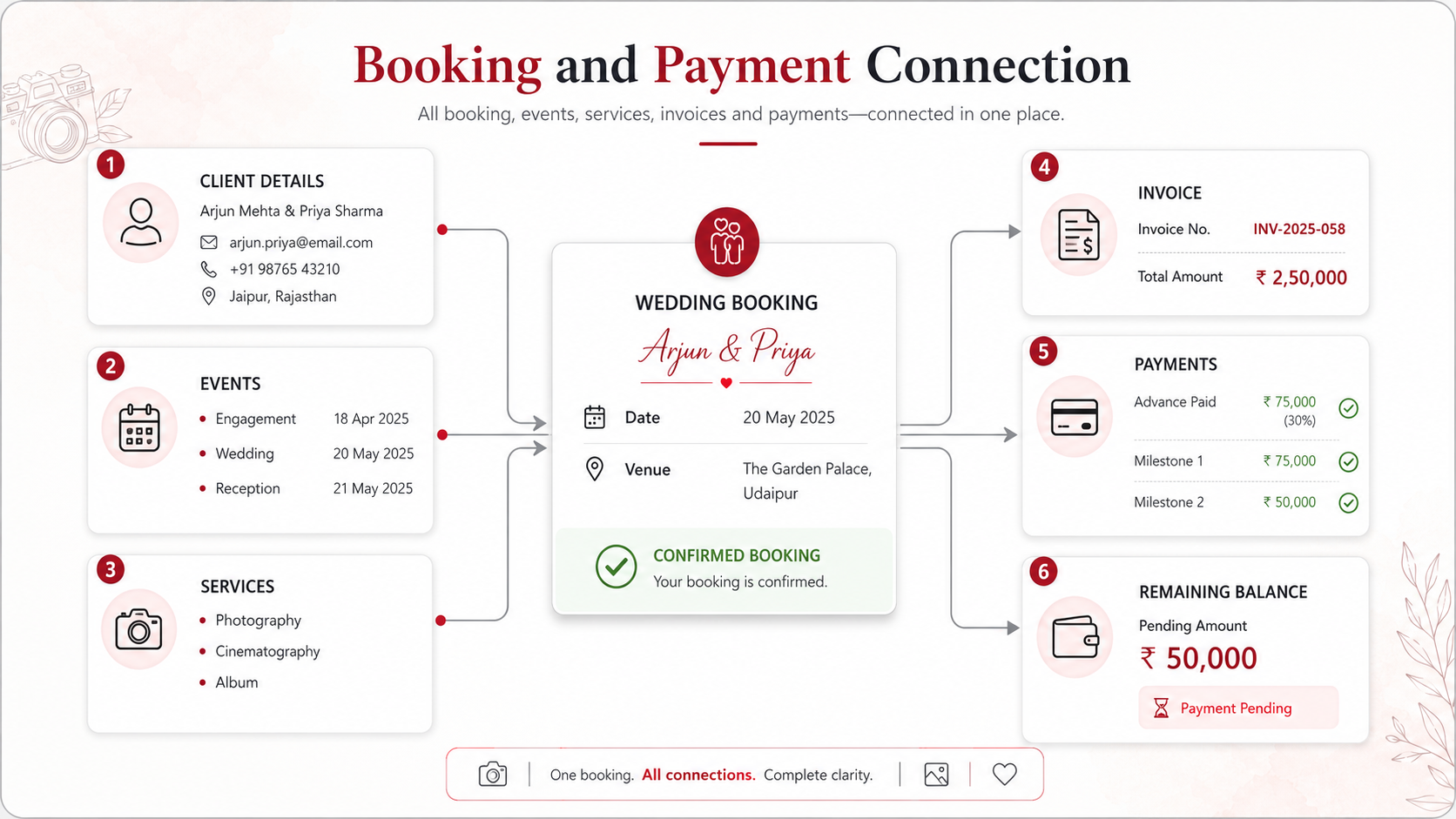
GoPickle Booking Management connects client details, events, services, payments, crew and deliverables into one booking workflow.
GoPickle’s Smart Invoicing for Photographers helps studios manage invoices, payment tracking and outstanding amounts as part of their workflow.
Conclusion
Photography businesses are built on creativity, but financial clarity keeps the business healthy.
A payment history is not only about collecting money. It protects the client relationship, prevents misunderstandings and gives the studio confidence about upcoming revenue.
Whether managing five weddings or fifty events, every photography booking should have a clear record of:
What was agreed.
What was paid.
What is pending.
What happens next.
A structured payment workflow allows photographers to spend less time searching through messages and more time creating great work.