Photography Studio Cash-Flow Forecast: Plan Around Advances, Milestones and Seasonal Bookings
Learn how to build a photography cash-flow forecast around advances, payment milestones, outstanding balances, crew costs, albums, taxes and seasonal bookings.

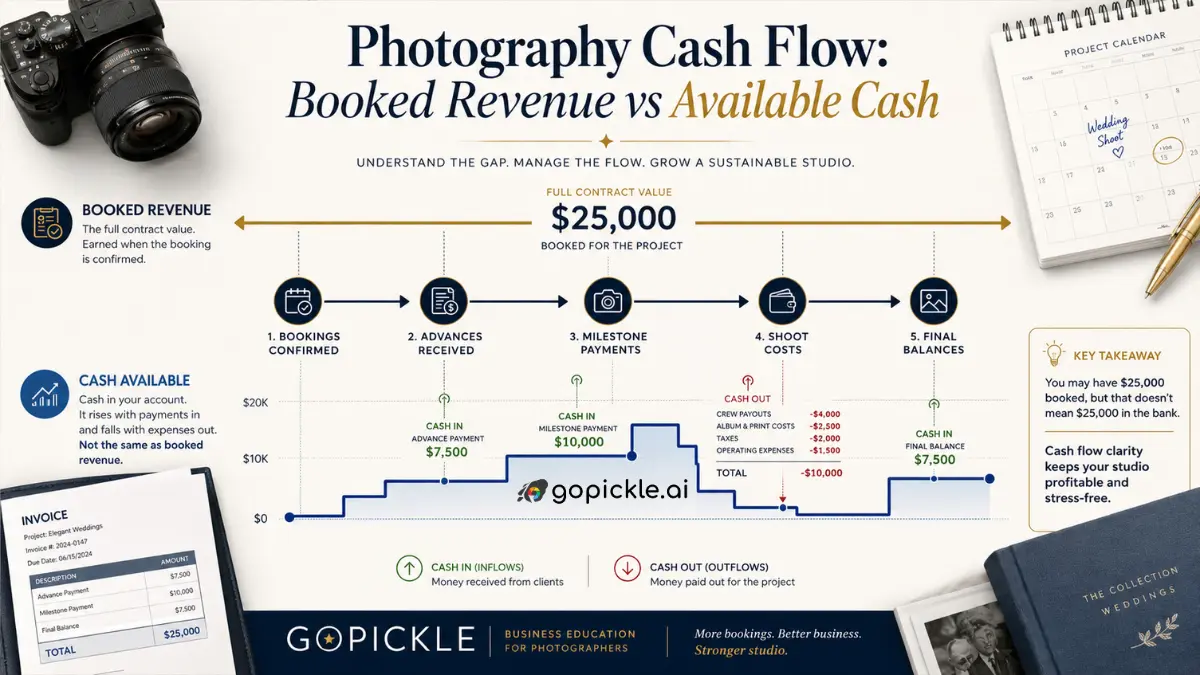
A photography studio can have ₹20 lakh worth of confirmed work ahead and still be short of cash next month. The reason is simple: booked revenue is not money available in the bank. A wedding confirmed today may include an advance now, another instalment closer to the event and a final balance months later. Meanwhile, the studio may have salaries, freelancer payouts, travel, equipment instalments, album production, software subscriptions, taxes and other expenses due before the client pays the remaining amount.
That difference is the foundation of good photography cash flow planning. A revenue report tells you what the studio has sold. A cash-flow forecast tells you whether the money expected to arrive, on the dates it is expected to arrive, can cover the money that needs to leave the business. Cash-flow projections are specifically designed around this timing difference between income and actual cash movement.
Start With Payment Dates, Not Booking Values
Consider a hypothetical ₹3,00,000 wedding package. The client pays ₹75,000 at confirmation, ₹1,25,000 ten days before the wedding and ₹1,00,000 before final delivery. The booking is worth ₹3,00,000, but immediately after confirmation the studio has received only ₹75,000.
That distinction becomes more important when several projects overlap. Five confirmed weddings worth ₹15 lakh may look reassuring on a sales dashboard, but the cash available this month depends on when their advances, milestone payments and balances are actually due.
A useful photographer cash flow forecast should therefore begin with your current bank balance and then list expected receipts by date: booking advances, scheduled instalments, final balances, portrait-session payments, commercial invoices and any overdue amounts you realistically expect to collect. Do not automatically treat every pending invoice as next month's cash. Use the payment behaviour you actually see in your business.
GoPickle's invoice software for photographers helps studios separate invoice totals, advances received, pending balances, due dates and overdue payments instead of treating every issued invoice as collected revenue. That payment visibility provides better input for financial planning.
Put Future Booking Costs on the Same Timeline
Forecasting only incoming money creates false confidence. Against each expected receipt, add the cash that will leave the studio.
For a wedding business, this can include second shooters, cinematographers, drone operators, editors, travel, accommodation, album printing and outsourced post-production. Add recurring studio expenses such as salaries, rent, software, marketing, equipment finance and insurance, then account for tax payments and less frequent expenses that may not appear every month.
This is where booking-level costing and photography studio financial planning need to meet. A ₹2 lakh booking with ₹70,000 of future production costs does not make the whole ₹2 lakh available for salaries, new equipment or owner withdrawals.
Crew costs deserve particular attention because they often fall around busy shooting periods. GoPickle's crew management software for photographers keeps event assignments and salary or event-wise payout context connected to the work performed, making upcoming crew obligations easier to identify before they become unexpected cash requirements.
Build a Simple Rolling Photography Cash-Flow Forecast
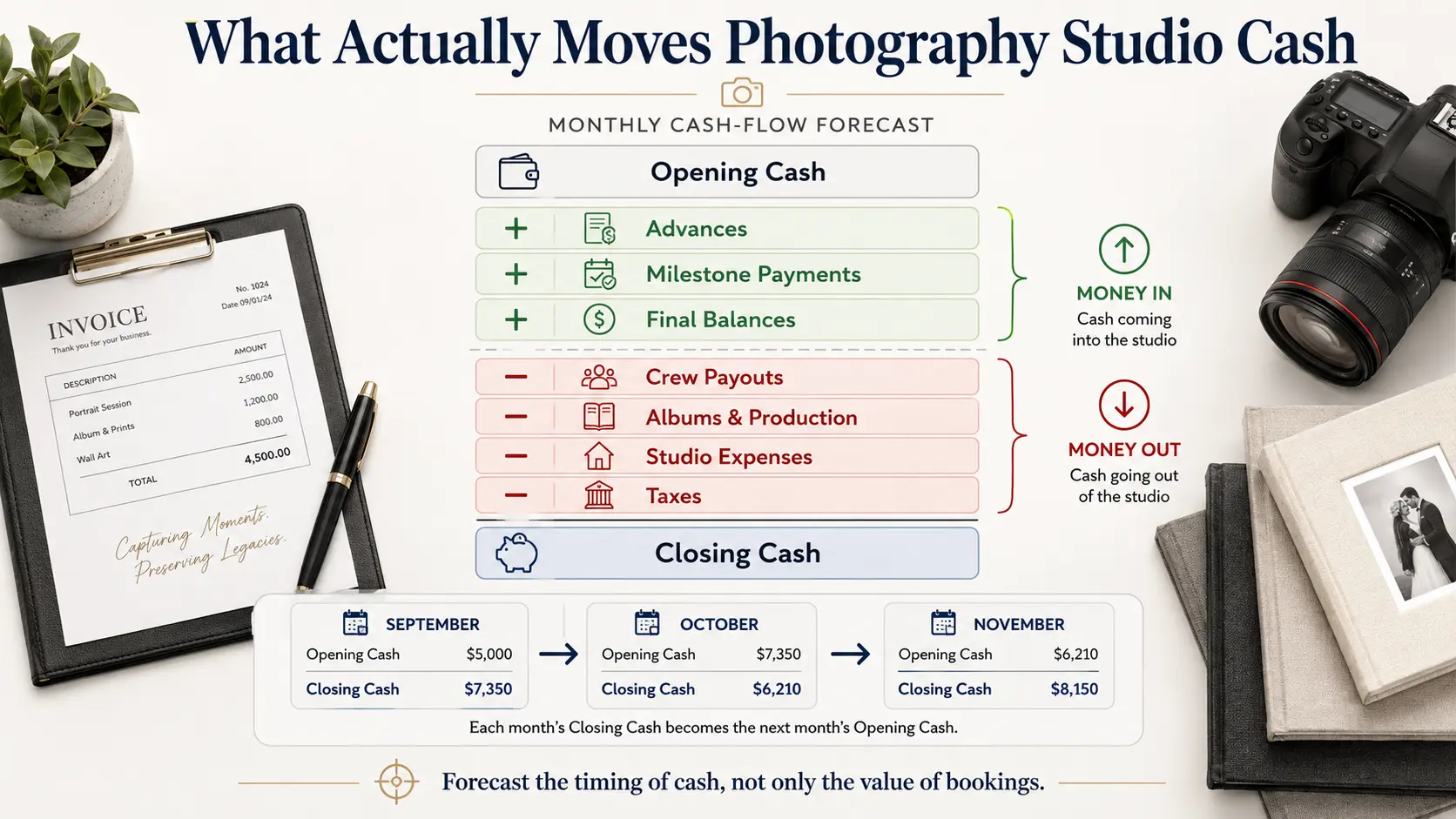
You do not need a complicated financial model to begin. Use this basic calculation for each week or month:
Opening cash + expected cash received − expected cash paid = projected closing cash
For example, suppose September starts with ₹4,00,000 in available cash. You reasonably expect ₹3,50,000 in client payments during the month. Crew, albums, salaries, rent, taxes and other planned expenses total ₹5,25,000. Your projected closing cash is ₹2,25,000.
Now repeat the calculation for October, November and the months that follow. The important number is not just whether one month looks profitable; it is whether the projected closing balance remains sufficient as payments and expenses move through the studio.
For short-term management, a rolling weekly or 13-week forecast is commonly used because it gives businesses enough visibility to identify upcoming shortages while keeping assumptions reasonably current. A broader monthly forecast helps with seasonal and annual planning.
Photography Seasonality Makes an Annual Revenue Number Misleading
Photography income rarely arrives evenly across twelve months. Wedding seasons depend heavily on region and market. School photography follows academic calendars. Corporate assignments can cluster around conferences, launches or company budget cycles. Portrait businesses may see stronger periods around holidays and family occasions.
Do not simply divide projected annual revenue by twelve and assume that is your monthly income. Forecast the months in which payments are actually likely to arrive and compare them with the months in which expenses fall. Current cash-flow guidance specifically recommends using comparable historical periods when modelling seasonal businesses rather than extrapolating one busy month across the year.
The same principle should influence how you treat strong months. A large collection month is not automatically a signal that the studio can increase spending. Part of that money may need to fund crew payouts, albums and post-production for work already sold, taxes that become payable later, or fixed expenses during an upcoming quieter period.
Keep a Cash Reserve Separate From Future Commitments
A useful reserve is not simply whatever happens to remain in the bank. Work out how much cash the studio needs to survive a weak period while still paying unavoidable commitments.
Look at your fixed monthly operating costs, confirmed project expenses, upcoming taxes and the reliability of outstanding client balances. Then decide what minimum cash position you are unwilling to fall below. There is no responsible universal reserve figure for every photographer: a solo portrait photographer working from home and a wedding studio employing ten people carry very different financial exposure.
If your forecast drops below that minimum, you have time to respond. You might accelerate legitimate outstanding collections, postpone a discretionary equipment purchase, adjust owner withdrawals, reduce avoidable spending or change future payment milestones. The value of the forecast is that these decisions happen before the bank balance becomes the problem.
For studios still unclear about their underlying cost base, our guide to calculating a photography business break-even point is a useful companion because it separates recurring studio expenses from the costs created by individual bookings.
Use GoPickle for Visibility, Not as a Substitute for Accounting
At GoPickle, we think the first financial problem a photography studio needs to solve is often visibility: what has been booked, what has actually been collected, what is still due, and what work will create upcoming costs?
GoPickle connects photography bookings, invoices and payments with the client and operational workflow, while crew management keeps payout context attached to assignments. Its invoice workspace shows collected, pending, due and overdue amounts rather than stopping at “invoice sent.”
That information should feed your bookkeeping and cash-flow forecast; it does not replace proper accounts, tax records or professional financial advice.
The discipline is straightforward: stop asking only “How much business have we booked?” and start asking “When does that money arrive, what must be paid before then, and what will be left afterwards?”
That is the number a photography studio can actually plan around.