Lead Generation Tips for Professional Photographers: Get More Photography Leads
Practical photography lead generation tips covering Google, Instagram, referrals, ads, partnerships, directories and better lead management.

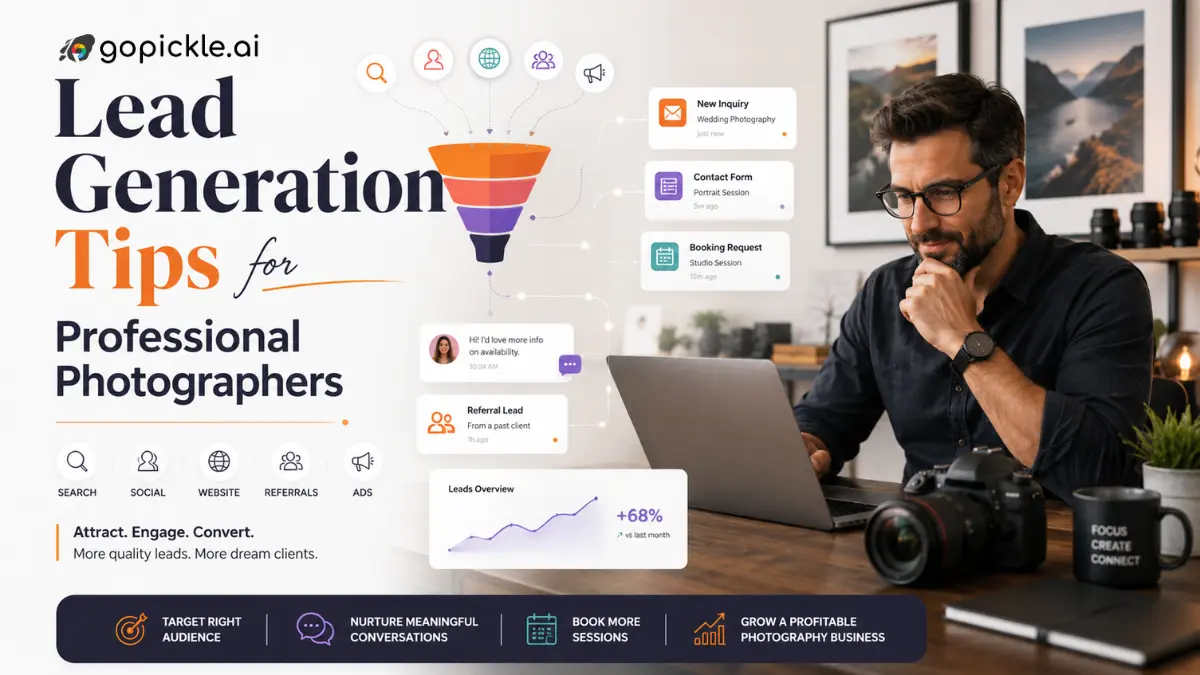
A photography business rarely has just one lead problem.
Some photographers need more enquiries. Others receive plenty of Instagram DMs but very few serious bookings. Established studios may have referrals coming in regularly, yet have no reliable way to know which marketing channel is actually producing profitable work.
Good lead generation for photographers starts by separating three things: getting discovered, giving people a reason to enquire, and handling that enquiry well enough to move it toward a booking.
That means building more than an Instagram following. A strong photography studio should have several lead sources working at the same time.
Start With the People Already Looking for a Photographer
The strongest photography leads often come from people who already have a requirement.
Someone searching for a “wedding photographer in London,” “newborn photographer near me” or “corporate event photographer in New York” is very different from someone casually watching a Reel.
Google Business Profile
For a local photography studio, Google Business Profile should be treated as a lead-generation channel, not simply a business listing.
Complete your services, business information, service area, photographs, website and contact details. Keep recent work visible and actively collect genuine client reviews.
Google states that local results are influenced mainly by relevance, distance and prominence, and that complete and accurate business information can improve a business's ability to appear in relevant local searches.
After completing a project, send the client your Google review link instead of vaguely asking them to “leave a review sometime.” Google provides both direct review links and QR codes for this purpose.
Your Photography Website and SEO
Your website should answer the questions behind a buying decision. Do not build one portfolio page containing weddings, babies, products, fashion and corporate events together. Create separate service pages such as:
- Wedding Photography
- Pre-Wedding Photography
- Corporate Event Photography
- Maternity and Newborn Photography
- Product Photography
- Destination Wedding Photography
Then publish useful pages around the searches clients make before hiring.
A wedding photographer could write about venues they regularly photograph, realistic wedding photography packages, timelines, lighting at popular venues or questions couples should ask before selecting a photographer.
This is where SEO for photographers becomes commercially useful. You are not trying to attract everyone interested in photography. You want people researching a photography service they may actually purchase.
Read More on How to Build a Photography Portfolio That Converts Visitors Into Enquiries
Turn Instagram Into an Enquiry Channel
Instagram is naturally important for photographers, but followers alone are not photography leads.
Your profile should quickly tell a potential client what you photograph, where you work, what your visual style looks like and how they can enquire.
Post finished work, but also show what hiring you feels like. Behind-the-scenes clips, complete wedding stories, venue walkthroughs, client reactions, album deliveries and short explanations of your process can answer questions that portfolio images cannot.
Every few posts should give the viewer somewhere to go next:
“Check availability for your wedding date.”
“Request our wedding photography packages.”
“Planning a corporate event? Send us the brief.”
The objective is not to make every post promotional. It is to make enquiry easy once someone becomes interested.
Use Facebook and Instagram Ads Carefully
Facebook ads for photographers and Instagram ads can generate considerable enquiry volume, particularly for weddings, maternity shoots, family sessions, seasonal mini-sessions and local events.
Meta's lead ads can collect information through instant forms and allow businesses to add questions that help qualify an enquiry. Use that opportunity.
Instead of collecting only a name and phone number, ask for useful buying information such as event type, event date, city or venue, required services and approximate budget.
An ad offering simply “Best Wedding Photography - Contact Us” gives Meta very little help in distinguishing casual price shoppers from serious prospects.
A more focused campaign might advertise:
“Wedding photography for 2026 Bengaluru weddings. Check availability and request packages.”
Send wedding, newborn and commercial campaigns to different forms or landing pages. Their requirements and buying decisions are not the same.
Read more on Meta Ads Leads for Photographers: How to Handle Them After They Arrive
Capture High-Intent Searches With Google Ads
Google Ads works differently from Meta advertising. With Search campaigns, keywords help match advertisements with what people are actively searching for.
That makes terms such as wedding photographer near me, wedding photography packages, corporate event photographer, or professional photographer in [city] potentially valuable because the search itself can signal commercial intent. Avoid sending every advertisement to your homepage.
An ad for destination wedding photography should reach a destination-wedding page. A corporate photography ad should open a page showing corporate work, relevant services, proof and a clear enquiry form.
And measure confirmed bookings, not just clicks or form submissions. Cheap leads are not necessarily good photography leads.
Build a Referral System Instead of Waiting for Referrals
Past clients can be one of a photographer's most valuable lead sources because trust already exists. But referrals should not depend on someone remembering your studio six months later.
After delivering the final gallery ask for a review, ask whether the client knows anyone currently planning a similar event, and make your Instagram or portfolio easy to share.
For family, maternity and newborn photographers, one client can also return through several life stages. Wedding photographers can later receive maternity, family, anniversary and sibling-wedding enquiries from the same network.
Treat your existing client base as an audience, not an archive.
Build Relationships With Other Wedding and Event Vendors
For wedding photographers, strong referral partners include wedding planners, venues, makeup artists, decorators, bridal designers, caterers, DJs and event companies.
Do not approach every vendor with “Please refer clients to us.”
Give them something useful. Send a venue a strong set of photographs showing its property. Tag decorators and makeup artists properly when posting collaborative work. Offer planners a curated gallery they can use when presenting past events, where client permissions allow.
The goal is to become a photographer that other vendors are comfortable recommending.
For commercial photographers, the partner network changes. Marketing agencies, web-development companies, production houses, coworking spaces, event organisers and branding agencies may produce more relevant work.
Use Pinterest, YouTube and Searchable Content for Longer-Term Discovery
Pinterest can be especially relevant to wedding, maternity, newborn, fashion and interior photographers because users use the platform to discover and plan ideas. Pinterest also notes that its content is not purely chronological, allowing content to remain discoverable beyond the day it is published.
Create Pins from real weddings, venue galleries, posing ideas, bridal portraits and planning guides that lead back to relevant pages on your website. YouTube can serve a similar purpose.
Instead of publishing only cinematic showreels, answer purchase-related questions:
“What does a ₹1 lakh wedding photography package include?”
“How many photographers do you need for a 500-guest wedding?”
“Candid vs traditional wedding photography.”
A useful video can bring enquiries long after an Instagram Story disappears.
Do Not Ignore Offline Photography Leads
Not every client begins online. Photography leads can also come from wedding exhibitions, bridal fairs, business networking groups, local communities, schools, colleges, apartment communities, corporate HR teams, event organisers, print partners and direct recommendations.
Commercial photographers can also use targeted outbound prospecting. Identify hotels, restaurants, manufacturers, architects, ecommerce brands, real-estate companies or agencies whose existing photography could clearly be improved, then approach them with a specific proposition rather than a generic portfolio link.
Reactivate Old Leads and Past Enquiries
New leads are expensive to acquire. Your old enquiries already know your studio. Review people who previously contacted you but did not book.
Some will have chosen another photographer permanently. Others may have postponed the event, changed dates, enquired for a different family member or simply stopped responding. A respectful follow-up months later can reopen a conversation. The same applies to previous clients. Announce relevant services, festive sessions, new studio offerings or seasonal availability without turning every client relationship into a constant sales campaign.
Know Which Photography Lead Sources Actually Produce Bookings
Once several channels are active, the question changes from:
“Where can I get more photography leads?”
to:
“Which source gives me the right clients?”
Track the source of every enquiry along with its requirement, expected value and eventual result. Compare referrals, Instagram, Google Search, Google Ads, Meta ads, website forms, marketplaces, wedding planners, venue partners, existing clients, events and direct outreach.
You may discover that Instagram generates attention while Google generates purchases. Or Meta may produce the most enquiries while wedding planners produce fewer but larger bookings.
That information should decide where your next marketing rupee and your next hour go.
Read more on Which Lead Sources Work Best for Photography Studios?
More Leads Only Help if You Can Manage Them
As lead generation improves, another problem appears quickly: enquiries start arriving from Instagram, WhatsApp, calls, website forms, advertisements and referrals at the same time.
That is where photography lead management software becomes useful.
With GoPickle.ai, a studio can record where an enquiry came from, capture the client's requirement, event details, services, budget and expected value, assign a lead owner and schedule the next action. Leads can then move through follow-up, quotation and booking instead of remaining scattered across chats and memory.
The source remains attached to the opportunity, which also makes it easier to understand where future bookings are actually coming from. GoPickle is designed to carry the same context from lead to quotation and booking rather than making the studio rebuild the client information at every stage.
Generating more photography leads matters. Knowing which ones deserve attention, following up at the right time and converting the good ones matters just as much.
Read More on How Photographers Can Stop Losing Leads After the First Enquiry
If your studio is beginning to outgrow WhatsApp, spreadsheets and mental reminders, you can start managing photography enquiries in GoPickle.ai and build a clearer path from first contact to confirmed booking.