Wedding Photography Service Page: Build Search Intent, Proof and Enquiry Flow Without Keyword Stuffing
Build a wedding photography service page with clear location fit, portfolio proof, pricing cues, process details and an enquiry flow without keyword stuffing.

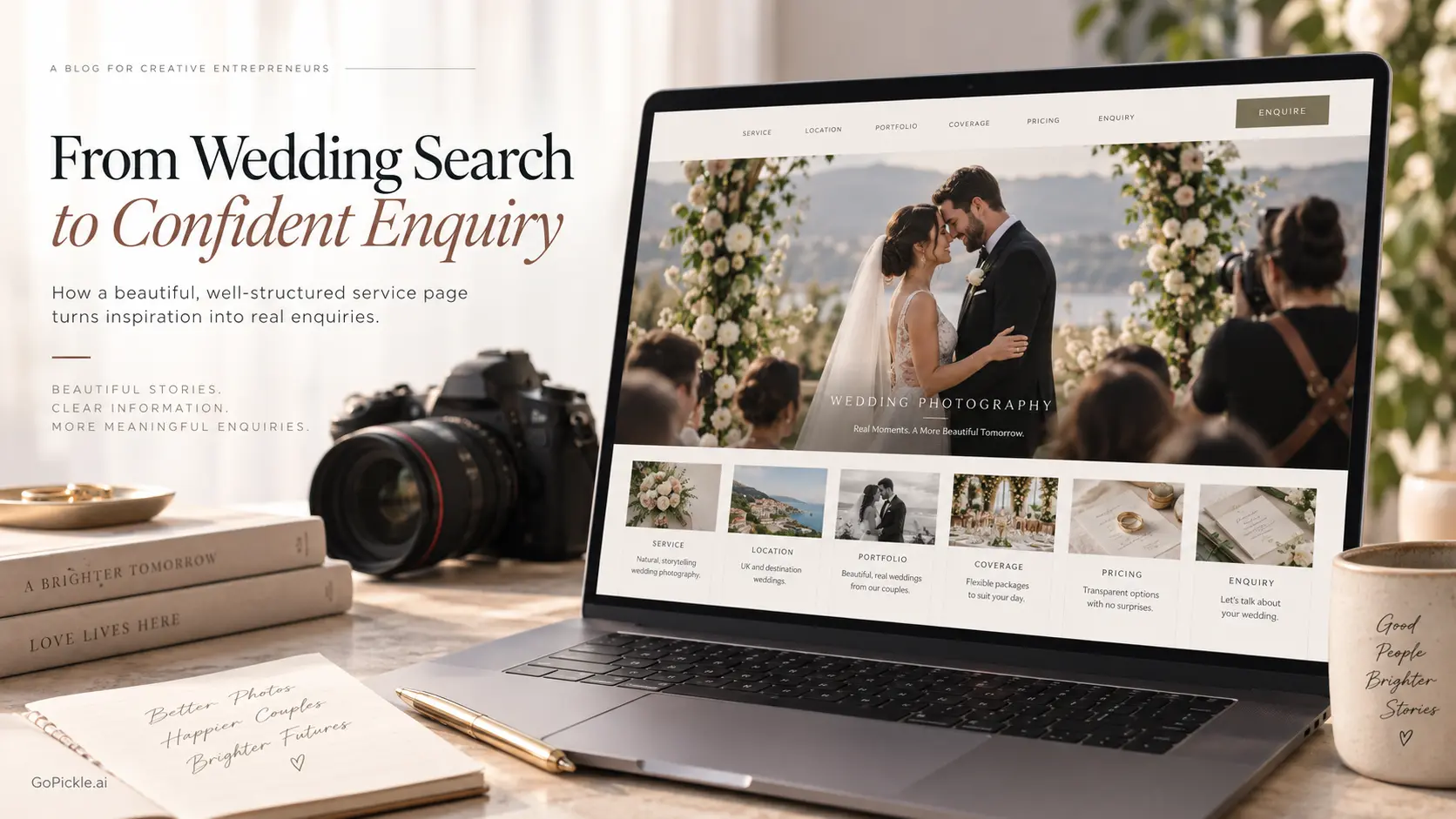
A wedding photography service page sits between discovery and enquiry. The visitor is no longer browsing photography in the abstract. They are deciding whether your studio covers their kind of wedding, works in their location, has a style they trust and is worth contacting. That makes this page different from a homepage, a general portfolio or a pricing sheet.
At GoPickle.ai, we think the job of a wedding photographer service page is simple: reduce the uncertainty that stops a suitable client from enquiring. SEO matters, but the page should not read as though it was assembled from repeated phrases and lists of cities. A useful page earns relevance by answering the same questions the searcher is already trying to resolve.
What searcher intent a service page must satisfy
Search intent for wedding photography is usually commercial long before somebody submits a form. A searcher may arrive through a query combining the service with a city, venue, style, destination, package or price. Once they land, they need enough information to judge fit without opening several more pages just to understand the offer.
Your wedding photography service page should establish what you photograph, where you work, what the finished work looks like, how coverage works and what the visitor should do next. Price and booking questions also need context. A couple planning an intimate civil ceremony and a client organising a three-day destination wedding may both be searching for wedding photography while needing very different coverage.
This is why one useful page is normally stronger than several thin pages created only for slight keyword variations. Create a separate page when the service meaningfully changes, such as destination wedding photography, wedding films or a distinct market where you have real local work and operational information. For the broader distinction between a portfolio and a conversion path, see our guide to building a photography portfolio that converts visitors into enquiries.
Put service and location clarity above the fold
The first screen should tell the visitor what the page is about before they start interpreting your photographs. A headline can be as direct as “Documentary Wedding Photography in [City]” or “Wedding Photography and Film Across [Region].” The supporting copy can explain the style, typical type of wedding and wider travel area in natural language.
Location wording should reflect the business you actually run. If you are based in one city but regularly travel, say that. If you mainly serve a defined local area, make that clear instead of presenting yourself as available everywhere. If destination work has different travel, accommodation or scheduling requirements, mention those later in the page rather than hiding them until the quotation.
The hero also needs a next step that matches the visitor’s decision. “Check Availability,” “Tell Us About Your Wedding” or “Request Coverage Options” gives more context than a generic “Contact.” A secondary link to wedding stories or the portfolio can work for visitors who need more proof before they enquire.
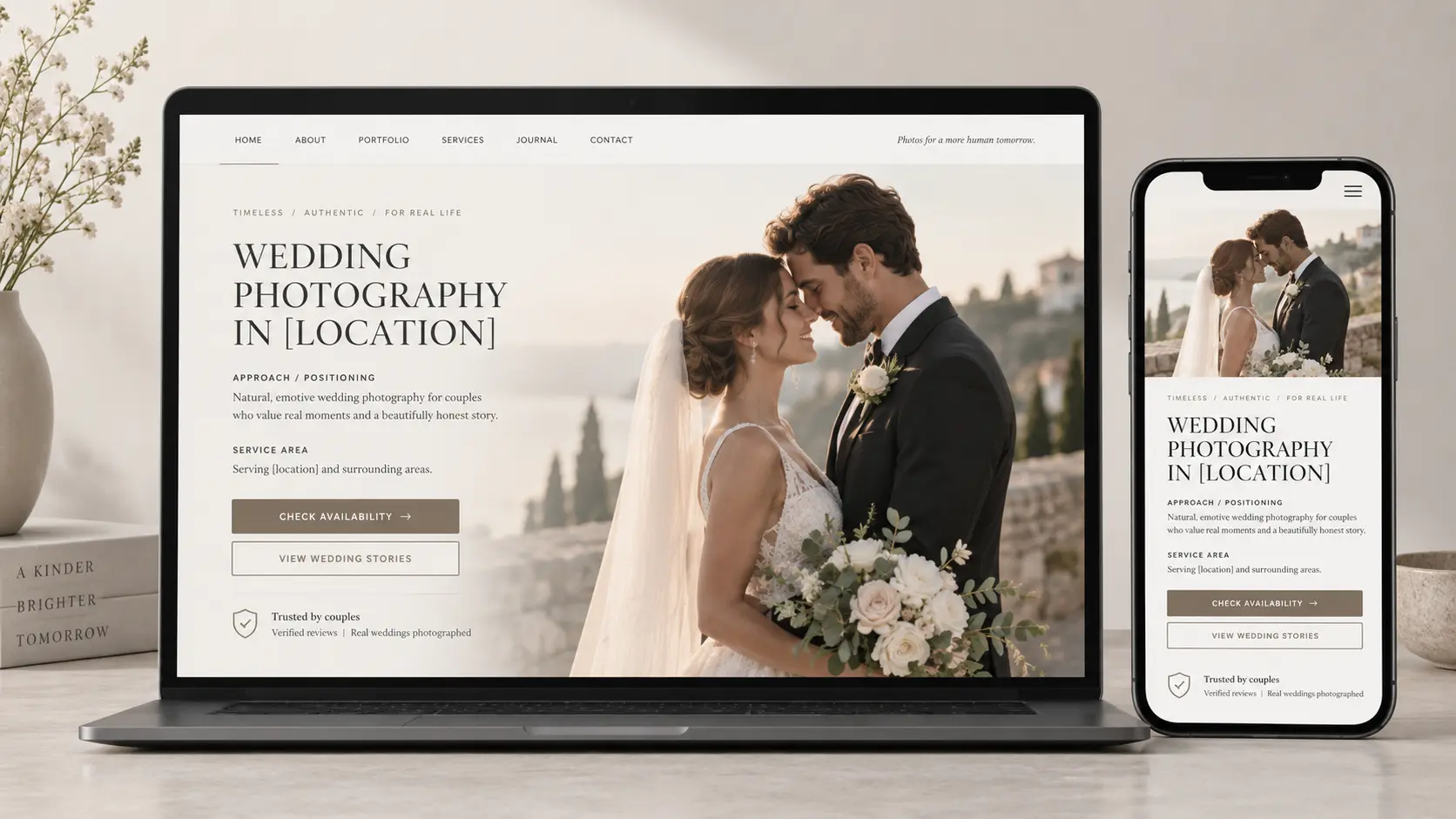
A practical above-the-fold structure is: service-focused H1, short positioning line, real service area, one strong wedding image, one primary CTA and a small proof cue you can verify. The proof cue might be a review rating, years in business, a publication or a venue relationship. Avoid labels such as “best wedding photographer” unless you are quoting a legitimate, attributable award or source.
Show portfolio evidence without making the page a gallery dump
Wedding clients need to see the work, but more photographs do not automatically create more confidence. A service page should show enough evidence to support the promise you are making about the service.
If you describe your work as documentary, show unscripted moments. If you sell coverage that handles difficult venues and long event days, include ceremonies, receptions, low-light spaces, family groups and changing conditions. If your visual identity is editorial or fashion-led, show consistency across portraits, details and wider scenes rather than relying on one striking hero frame.
The key distinction is proof versus volume. Your photography portfolio can hold deeper bodies of work. The service page should curate the photographs most relevant to the buying decision and provide routes into full stories for visitors who want to inspect more.
Explain coverage and process before the client has to ask
A common weakness on wedding photographer landing pages is a jump from beautiful images straight to an enquiry button. The visitor may like the work and still have no idea what hiring the studio actually involves.
Explain the commercial and operational shape of the service. Tell the reader whether you cover single-day and multi-day weddings, whether photography and film can be booked together, how additional photographers are handled, what the client receives, how travel is approached and how planning works before the wedding. You do not need to publish every contract clause, but the page should give a credible picture of the experience being purchased.
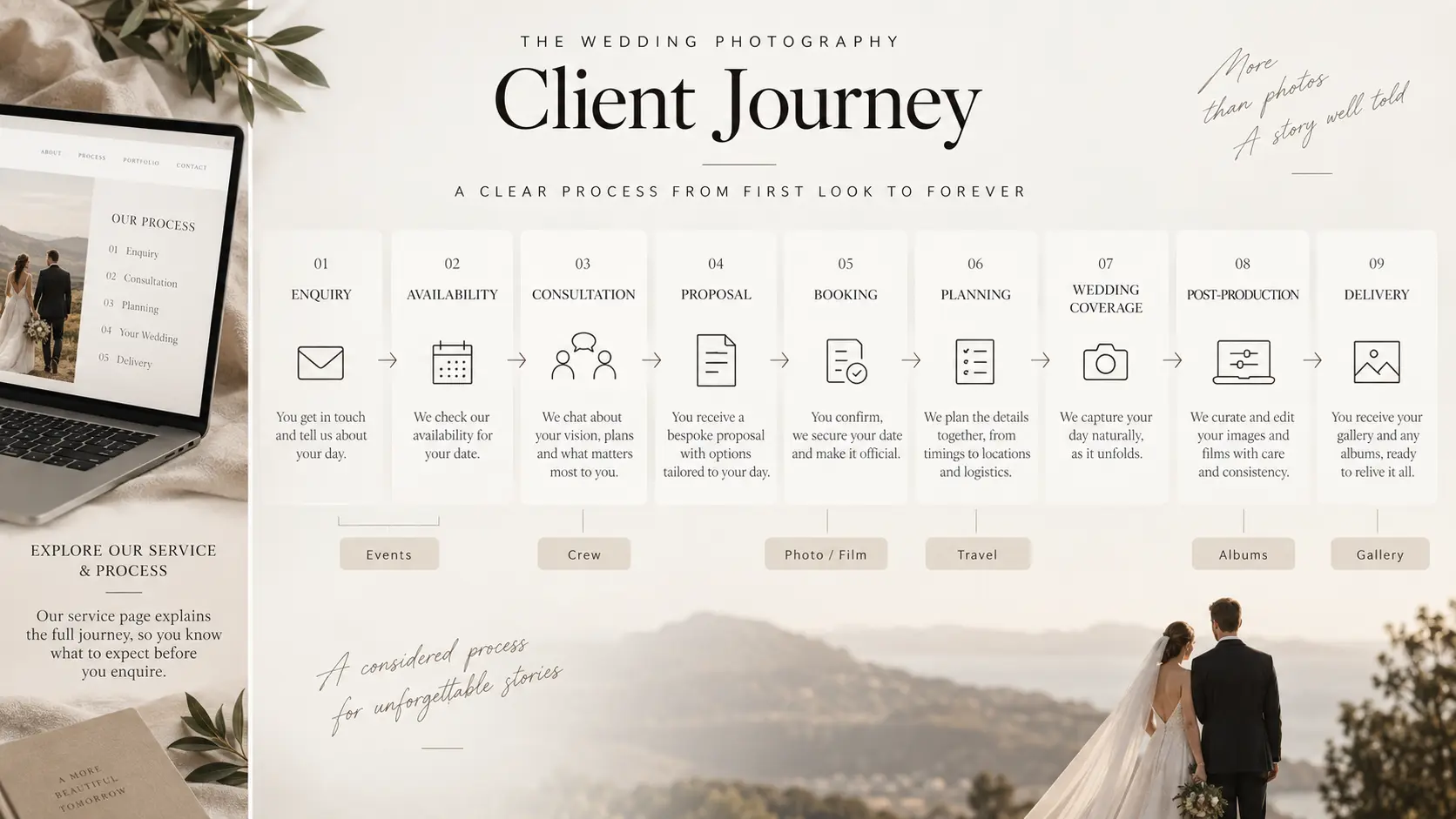
A simple process can move from enquiry to availability check, consultation, proposal, booking, planning, wedding coverage, post-production and delivery. For studios handling complex celebrations, the operational reality may include several events, venues, crew assignments, payments and final galleries. Our wedding photography workflow shows how GoPickle connects those stages after the enquiry becomes active work.
Define important scope boundaries in plain language. If film is optional, say so. If albums are separate, explain that. If travel is quoted according to location, state it. If delivery time depends on the package, avoid promising one universal turnaround that does not apply to every wedding. Good wedding photography website content reduces surprises before they reach the proposal.
Use pricing cues appropriately
There is no single correct rule that says every wedding photographer must publish full prices or hide them. The right level of detail depends on how standardised the service is and how much the final scope changes with events, hours, crew, travel, albums, film and other deliverables.
A studio with repeatable packages may show complete prices. Another may publish a meaningful starting investment. A business with wider variation may show typical ranges, while a highly customised studio may explain the factors that shape the quote and ask for wedding details first. The mistake is leaving the visitor with no useful pricing context while expecting them to complete a long form.
If you publish a starting price, make sure it represents a real entry point. If you use a range, explain what moves a wedding toward the lower or upper end. If every wedding is custom quoted, tell the visitor what you need before you can price it. Our guide on whether photographers should show prices on their website covers these trade-offs.
Once a prospect is qualified, a visual proposal can carry the specific events, coverage, portfolio, package, add-ons, pricing and terms. GoPickle’s photography quotation software is designed for that later sales stage.
Answer buying objections instead of writing FAQ filler
A useful FAQ section should answer the points that repeatedly slow down real wedding enquiries. Depending on the studio, that may include how far in advance clients should enquire, whether the team travels, whether a second photographer is included, how photography and film are coordinated, when edited work is delivered, how albums are handled, what happens if the schedule changes and how privacy is handled for events that should not be published.
The wording matters. “Do you travel for weddings?” is useful if your answer explains the regions you cover and how travel costs are handled. “Why are you the best wedding photographer?” is not useful simply because it contains a keyword. Build this section from actual sales calls, emails and objections. Every answer should remove uncertainty, set an expectation or help the client decide whether the service fits.
For international work, avoid copying legal, cancellation, privacy or tax language from another photographer’s website. Those terms can vary by jurisdiction and should align with your own contract, local requirements and business practices.
Connect the CTA to a useful inquiry form
The service page has not finished its job when the visitor clicks a button. The wedding photography enquiry page or form has to continue the same conversation without making the prospect start again.
For most wedding enquiries, the first form needs enough information to identify the client, check basic fit and decide the next action. That usually means name, a reliable contact method, wedding date or timeframe, city or venue if known, the type or number of events, broad coverage required and a short space for the client to explain what they are planning. Budget can be useful when your workflow genuinely uses it for qualification, but it should not be compulsory simply because other studios ask for it.
Keep detailed production questions for later. Family group lists, complete timelines, shot lists, emergency contacts, accommodation details and album specifications belong in booking or pre-wedding planning, not necessarily in the first-contact form. Our photography inquiry form guide explains how to separate enquiry-stage information from booking and questionnaire data.
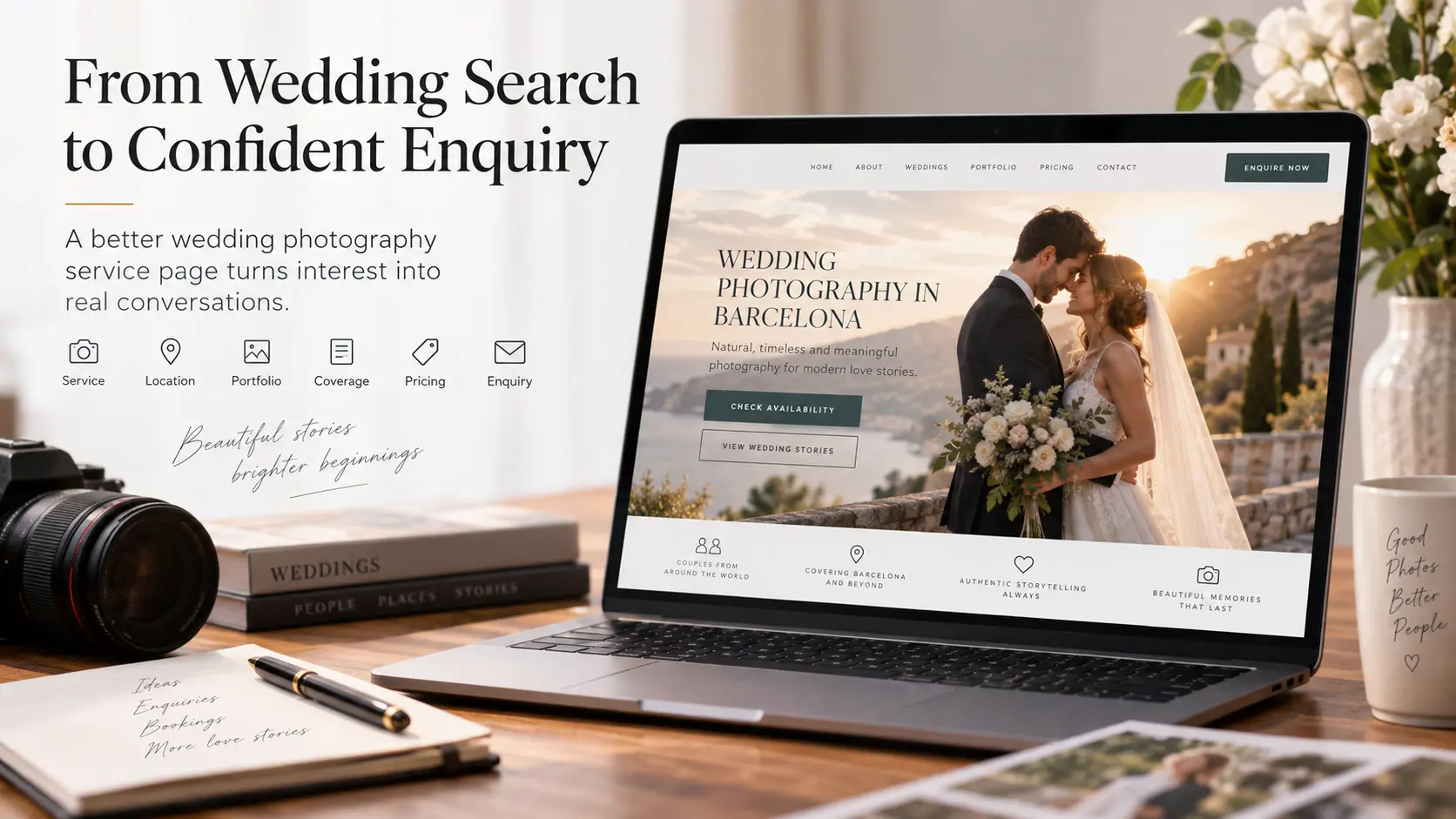
The handoff after submission matters too. A high-intent enquiry can still be lost if it disappears into an inbox with no owner or next action. In GoPickle, Lead Management for photographers keeps the requirement, date, source, assignees, follow-ups and pipeline stage together so the studio can move a suitable wedding enquiry toward a quotation and confirmed booking without reconstructing the conversation later.
Make the page readable for clients and understandable to search engines
Good wedding photography website SEO does not require repeating the primary keyword in every heading. Use a descriptive page title, one clear H1, a concise URL, useful section headings, natural service and location language, descriptive image alt text and internal links that help visitors reach deeper information.
Photography sites also have to protect the experience of the images themselves. Use appropriately sized files, descriptive filenames and alt text, and make sure the mobile version contains the important text and portfolio evidence rather than stripping the page down to a hero image and a button.
The best test is not how many keywords the page contains. Read it as a client who has never heard of the studio. Can they tell what you photograph, where you work, what your work looks like, what the service includes, what pricing direction to expect and how to enquire? If those answers are easy to find, the page is doing the work a strong wedding photography service page should do.
A good page gets the right visitor from interest to a useful enquiry. The photography creates the desire. The service-page structure turns that desire into enough confidence to take the next step.